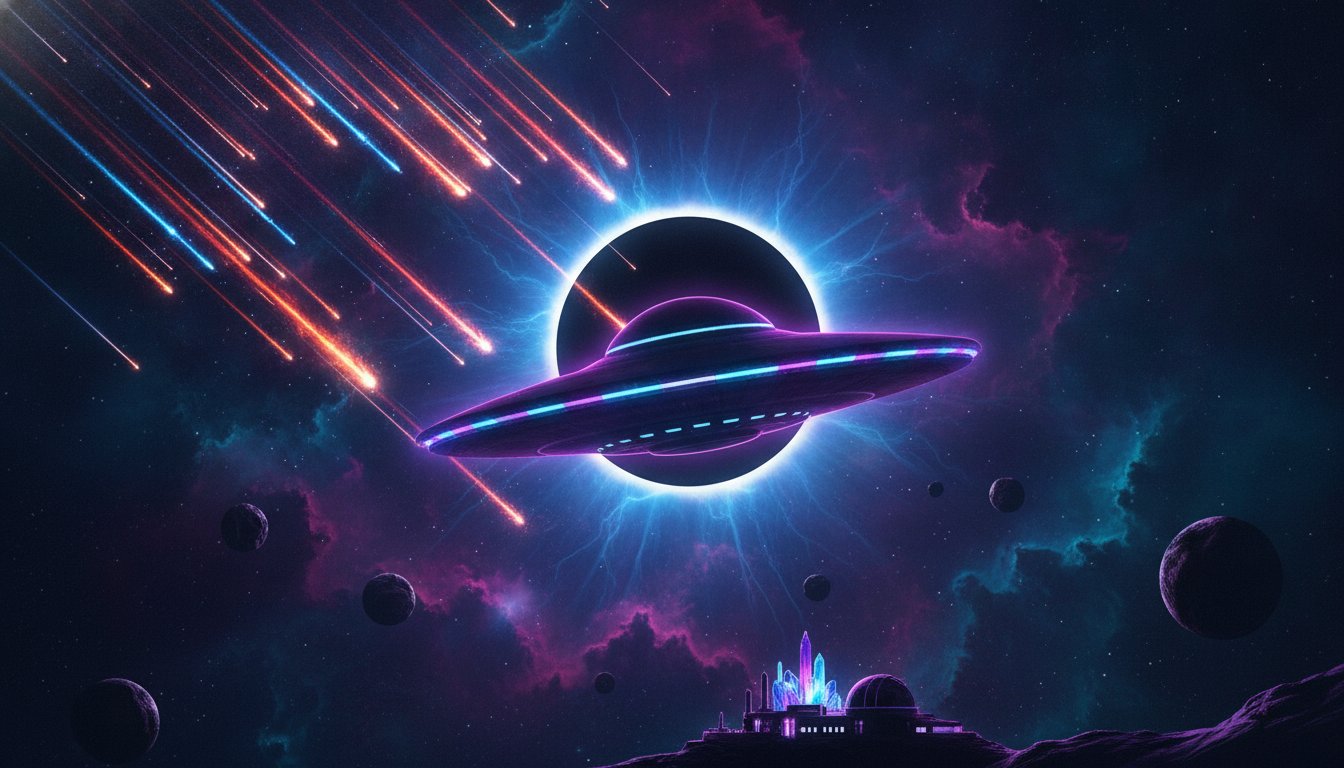
A Celestial Conjunction: The Perseids and the 2026 Total Solar Eclipse
In a rare astronomical alignment, the spectacular peak of the Perseid meteor shower is set to coincide with a breathtaking total solar eclipse on August 12-13, 2026. This cosmic doubleheader promises an unparalleled skywatching experience, plunging millions across Greenland, Iceland, and Spain into a fleeting, eerie twilight as the Moon dramatically obscures the Sun. While the eclipse itself is a marvel, a tantalizing question arises: will the showering embers of Comet Swift-Tuttle be visible against the unique backdrop of totality?
The Fiery Dance of the Perseids
The Perseid meteor shower is a beloved annual event, renowned for its prolific display of "shooting stars." Each August, Earth journeys through the vast stream of cosmic debris shed by Comet Swift-Tuttle, a celestial wanderer with an orbital period of 133 years. As tiny particles from this ancient comet collide with our planet's atmosphere at blistering speeds of 133,200 mph (214,365 km/h), they incandescence, creating brilliant streaks of light across the night sky. Under ideal dark sky conditions, observers can witness up to 100 meteors per hour, a truly mesmerizing cosmic spectacle that has captivated humanity for millennia.
The Grandeur of a Total Solar Eclipse
Complementing the Perseids in 2026 is the awe-inspiring phenomenon of a total solar eclipse. This occurs when the Moon perfectly aligns between the Sun and Earth, casting a narrow shadow across our planet's surface. For those within the path of totality – stretching across parts of Greenland, Iceland, and Spain – day will momentarily turn into a profound twilight. The Sun's ethereal corona, usually hidden by its brilliant face, will become visible, a pearly white crown of plasma extending into the darkened sky. This rare event offers a profound connection to the larger cosmos, a temporary shift in our celestial perspective that leaves an indelible mark on all who witness it.
Hunting for Shooting Stars During Totality: A Cosmic Wager?
The convergence of these two magnificent events naturally sparks curiosity: can one truly witness a Perseid shooting star during the brief, peculiar twilight of a total solar eclipse? While technically possible, experts caution that the odds are significantly stacked against such a sighting.
Robert Lunsford of the American Meteor Society weighed in on this cosmic lottery. "It would have to be a fireball that passed through the darkest portion of the sky," Lunsford explained, noting that the Perseids typically produce only about one fireball every three hours at night. "That's asking a lot for one of these bright meteors to appear during a 2-3 minute window. If anyone does see one, they had better go play the lottery asap!"
Bill Cooke, head of NASA's Meteoroid Environments Office, echoed this sentiment, emphasizing the challenge posed by the residual brightness during totality. "Only Perseid fireballs will be visible," Cooke stated. "Given the brightness and duration of the eclipse, you might see one if you're extremely, extremely lucky. [The] most likely scenario is that you will see no meteors whatsoever."
The Ultimate Spectator's Choice
The fleeting nature of a total solar eclipse, often lasting only a few precious minutes, demands undivided attention. While the romantic notion of spotting a Perseid meteor streaking across an eclipsed sun is undeniably appealing, the practical advice from seasoned astronomers is clear: prioritize the eclipse. Its rarity and profound visual impact are truly unmissable. There will be ample opportunities to revel in the Perseids under a truly dark night sky later in the evening or on other nights surrounding the peak.
For those eager to document this extraordinary cosmic event, preparing with expert guides on imaging total solar eclipses and fast-moving meteors is highly recommended. Whether you capture the event through a lens or simply immerse yourself in its wonder, the August 2026 total solar eclipse, with the distant promise of a Perseid fireball, promises to be an unforgettable chapter in our ongoing exploration of space mysteries.
0 Comments
Login to leave a comment.