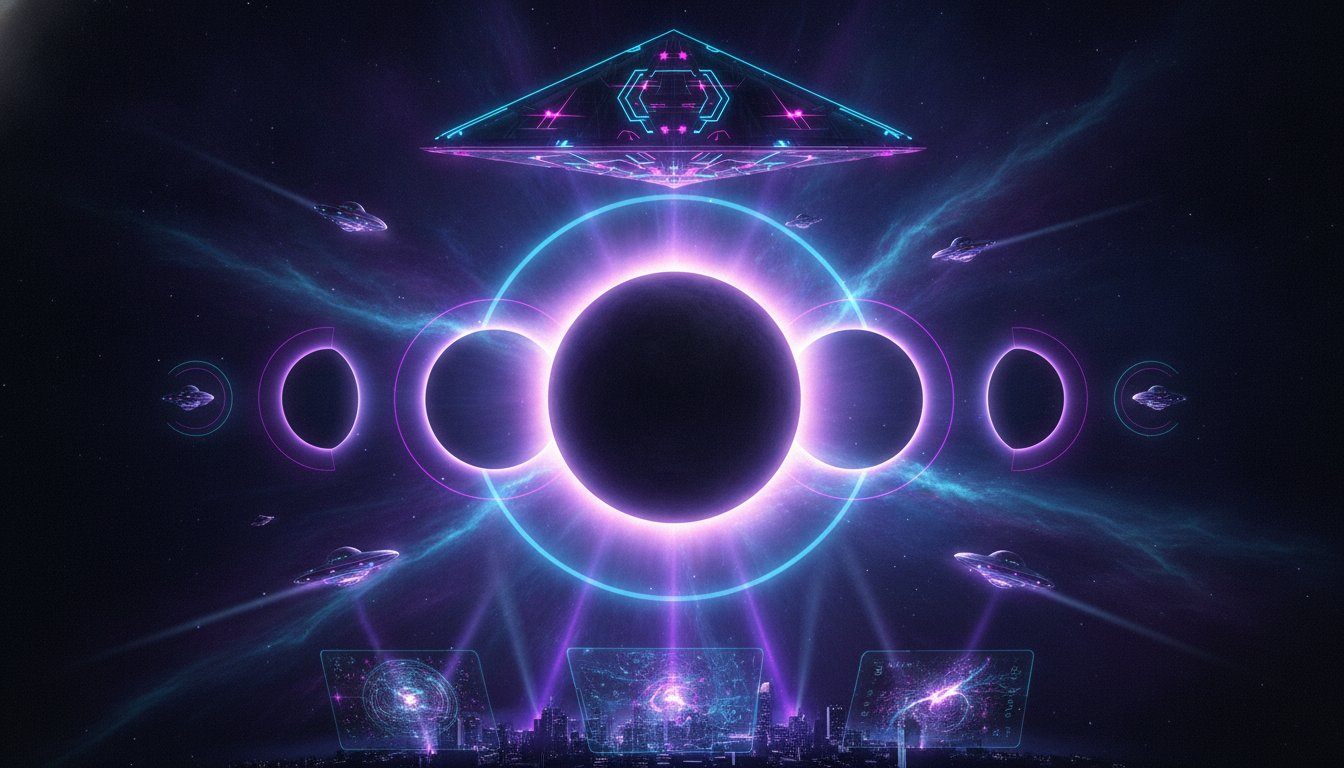
The cosmos is preparing a breathtaking display for August 12, 2026, when millions across the globe will turn their eyes skyward to witness one of nature's most profound spectacles: a total solar eclipse. This rare celestial event, a testament to the precise dance of our solar system's bodies, sees the Moon gracefully glide between the Sun and Earth, momentarily cloaking our star in an ethereal darkness and revealing its hidden corona. More than just an astronomical occurrence, the total solar eclipse is a moment that stirs wonder, inviting us to ponder the vastness of space and the myriad cosmic phenomena that populate our universe.
A Rare Alignment Across Continents
Unlike the subtle tilt that usually causes the Moon's shadow to miss our planet, August 12, 2026, promises a near-perfect alignment. The Moon's orbital path will carry its colossal shadow across a 182-mile-wide corridor, known as the path of totality. This privileged track will cut through parts of Spain, Iceland, and Greenland, offering residents and eager skywatchers a front-row seat to the full spectacle. Beyond this narrow band, hundreds of millions more will experience a magnificent partial solar eclipse, witnessing the Moon's gradual obscuration of the Sun without reaching full totality. For those unable to observe in person, digital access will ensure that no one misses this profound cosmic event.
Decoding the Five Stages of Totality
Experiencing a total solar eclipse is a journey through distinct phases, each offering unique visual wonders and stirring moments of anticipation. Understanding these stages enhances the appreciation of this celestial ballet:
Stage 1: The Partial Eclipse Begins (First Contact)
This initial phase marks the 'first contact,' when the Moon's disk first appears to take a 'nibble' out of the Sun. For the 2026 eclipse, this subtle transformation will first become visible in the skies over Alaska at 11:34 a.m. EDT (1534 GMT) on August 12. Over the next hour and a half, as the Moon progresses, the Sun will slowly transform from a burning orb into a slender, shining crescent. Observers might notice a gradual darkening of the sky and a noticeable drop in temperature. Intriguingly, pinpricks of light shining through small apertures, like leaves or a colander, will project numerous tiny crescent shapes, mirroring the celestial scene above. Throughout this partial phase, it is paramount to use certified eclipse glasses or sunoculars to protect your vision, as direct sunlight can cause permanent damage.
Stage 2: Second Contact – The Diamond Ring and Baily's Beads
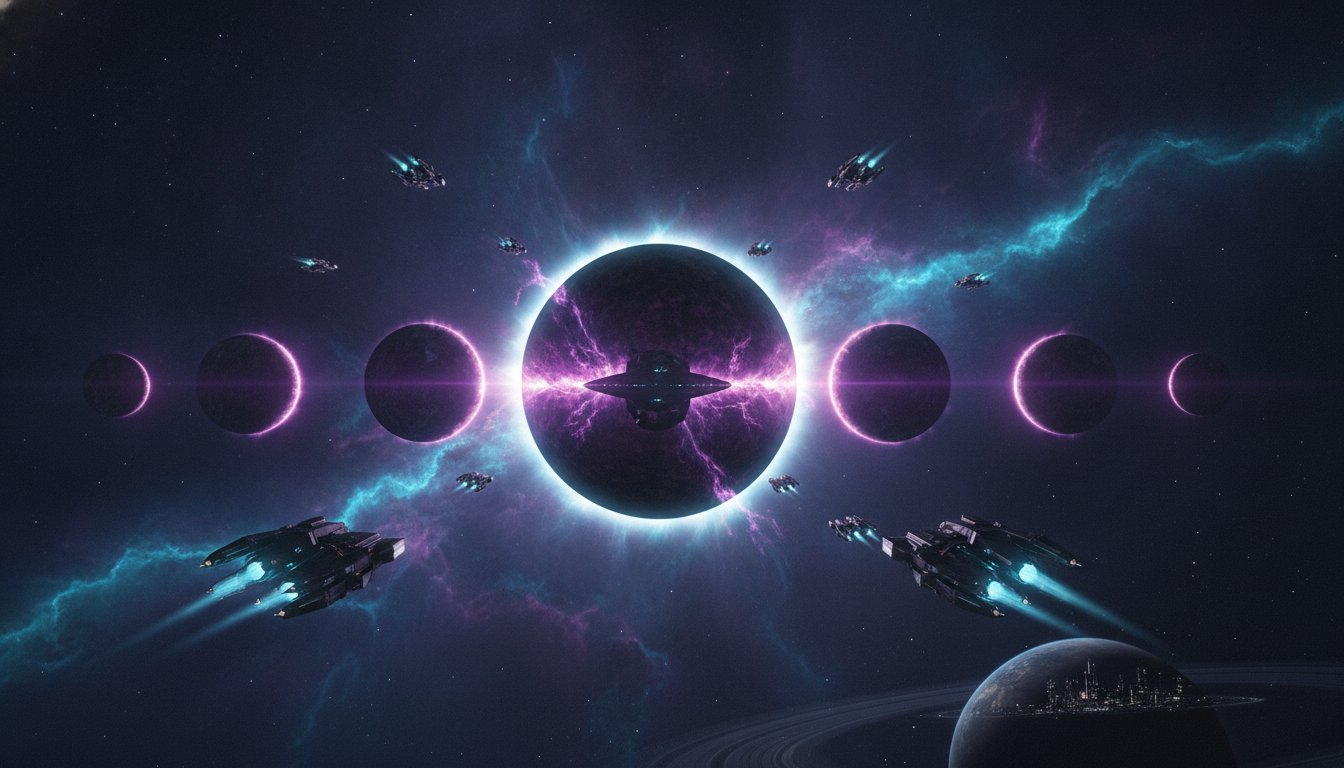
The moments leading up to totality are often considered some of the most dramatic. As the last sliver of the Sun's brilliant disk is about to vanish behind the Moon, the 'diamond ring' effect emerges—a stunning celestial jewel where a single point of sunlight shines brightly, encircled by the ethereal glow of the Sun's outermost atmosphere, the corona. Simultaneously, for those in the path, the Moon's shadow can be seen rapidly advancing from the west, engulfing the landscape in an eerie, false twilight. Just seconds before totality, 'Baily's Beads' appear: dazzling points of light formed as the last rays of sunlight stream through the valleys and ravines along the Moon's rugged limb. These fleeting phenomena serve as a final, dramatic prelude to the main event.
Stage 3: Totality and Maximum Eclipse – The Cosmic Spectacle Unveiled
This is the climax: as the last of the Sun's surface disappears, totality begins. The Moon acts as a natural coronagraph, blocking the Sun's intense disk and revealing its magnificent corona—a shimmering halo of superheated gas that is usually invisible due to the Sun's brilliance. During this phase, which for the 2026 eclipse will last a maximum of 2 minutes and 18 seconds, it is safe to remove your eclipse glasses and gaze directly at the awe-inspiring sight. Keep an eye out for glowing solar prominences—jets of plasma leaping from the Sun's surface—and the fleeting appearance of the red chromosphere, the layer beneath the corona. Roughly halfway through totality, 'maximum eclipse' occurs, when the Sun's disk is most perfectly hidden. The faux twilight might also reveal bright planets like Jupiter and Mercury to the lower right, and Venus to the upper left of the eclipsed Sun. For the incredibly lucky, the Perseid meteor shower, peaking around this time, might even offer a bonus shooting star against the darkened sky.
Stage 4: Totality Ends
As quickly as it began, totality draws to a close. The very first edge of the Sun's disk re-emerges from behind the Moon, reversing the spectacular pre-totality effects. Baily's Beads will reappear on the opposite side of the Moon, swiftly followed by the dazzling flash of the diamond ring effect. This is the cue to immediately put your eclipse glasses back on, as even a sliver of direct sunlight can be harmful.
Stage 5: The Partial Eclipse Ends (Fourth Contact)
The final stage sees the Moon's silhouette gradually exit the Sun's disk. This waning partial eclipse will conclude globally at 3:57 p.m. EDT (1957 GMT), as the Moon fully separates from the Sun in the skies off the west coast of Africa. This moment, known as 'fourth contact,' marks the official end of the 2026 total solar eclipse, leaving observers with indelible memories of an extraordinary cosmic alignment and the profound beauty of our universe.
Witnessing such a rare event reminds us of the intricate celestial mechanics governing our existence and opens our minds to the countless space mysteries that still await discovery beyond our world. Prepare to be part of history and experience the ultimate cosmic drama of the 2026 total solar eclipse.

0 Comments
Login to leave a comment.