
NASA's Curiosity Rover: A Decade of Daring on the Red Planet
On August 6, 2012, humanity took a monumental leap in planetary exploration as NASA's Curiosity rover successfully touched down on the rugged surface of Mars. This wasn't just another landing; it marked a pivotal moment in space engineering, demonstrating an audacious new method that captivated the world: the "sky crane" maneuver. Curiosity, at the time, represented NASA's most ambitious and massive robotic explorer sent to the Red Planet, a true testament to the agency's motto, "Dare Mighty Things."
The Audacious Sky Crane: A Triumph of Engineering
The journey of Curiosity from Earth to Mars culminated in what NASA engineers dubbed the "7 minutes of terror." This critical, self-directed descent phase, faster than any signal could travel from Mars to Earth, required the rover to execute a complex series of maneuvers entirely autonomously. Unlike previous Mars missions that relied on bouncy airbags (like Mars Pathfinder, Spirit, and Opportunity) or direct touchdowns (like the Viking landers), Curiosity's landing introduced a revolutionary approach. After using a parachute and retro-rockets to slow its atmospheric entry, a rocket-powered "sky crane" hovered above the Martian terrain. From this airborne platform, Curiosity, weighing nearly a ton on Earth and the size of a small car, was gently lowered to the surface on cables. This unprecedented feat of precision engineering, meticulously planned by the scientists and engineers at NASA's Jet Propulsion Laboratory (JPL) in Pasadena, California, worked flawlessly. The successful deployment at 1:31 a.m. EDT (0531 GMT), though 10:31 p.m. PDT on August 5 at JPL control, was a moment of global triumph and relief.
A Giant Pioneer for Martian Exploration
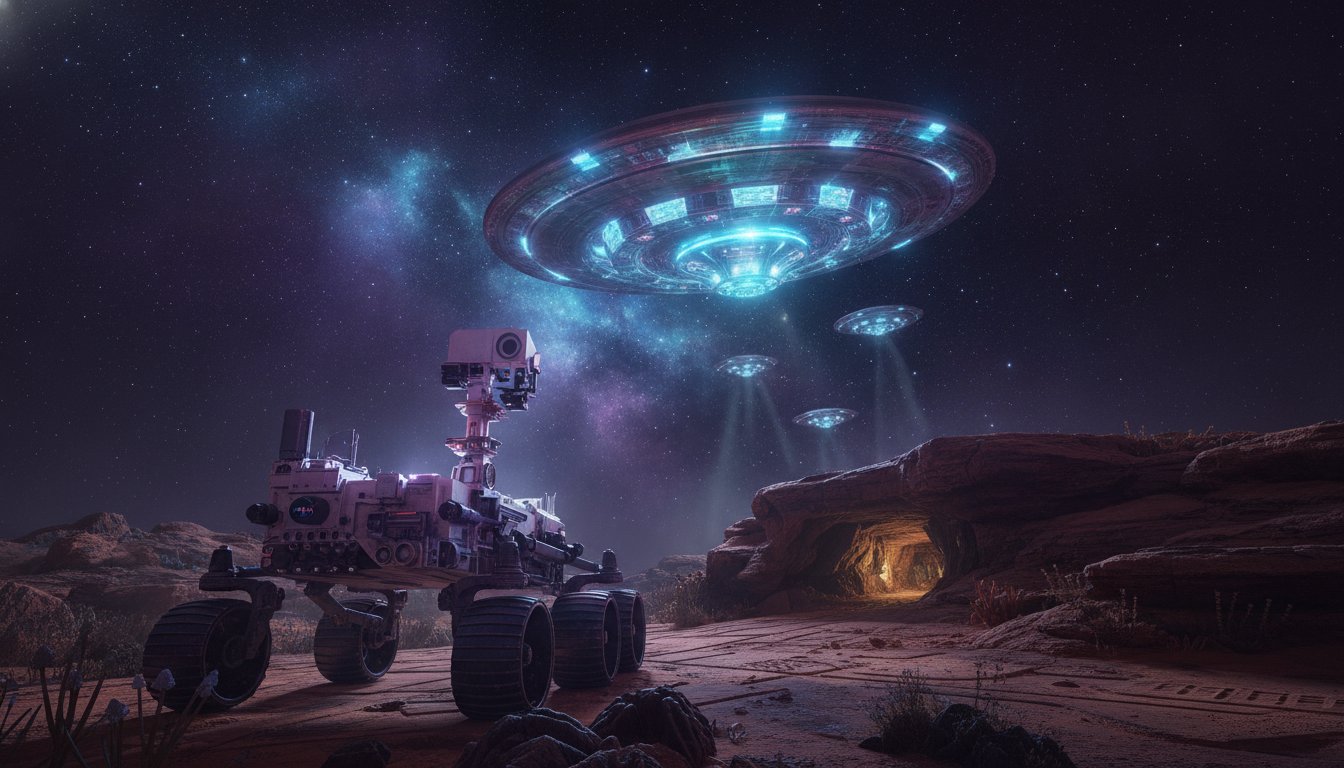
Curiosity wasn't just groundbreaking in its landing technique; it was a new breed of rover. Powered by a nuclear battery, it was the vanguard of a new family of massive, long-duration explorers designed to delve deeper into Mars' mysteries than ever before. Its robust design and sophisticated scientific instruments were built to withstand the harsh Martian environment for an extended period, searching for clues about the planet's past and potential for life. The success of Curiosity's sky crane landing proved the viability of this complex method, directly paving the way for future missions. Nine years later, in February 2021, the Perseverance rover—an even more advanced descendant—successfully utilized the same sky crane technique to land in Jezero Crater, showcasing the enduring legacy of Curiosity's pioneering achievement. Together, Curiosity and Perseverance stand as the largest and most capable rovers ever deployed to Mars, setting unprecedented benchmarks for interplanetary robotics.
Unearthing Mars' Ancient Secrets in Gale Crater
Since its spectacular arrival, Curiosity has been diligently exploring Gale Crater, a vast basin chosen for its geological diversity and signs of ancient water. For over 14 years, this mobile laboratory has traversed thousands of miles, drilled into numerous rocks, and meticulously analyzed soil samples. Its primary mission: to assess whether Mars ever had environmental conditions capable of supporting microbial life. Through its extensive research, Curiosity has discovered compelling evidence of ancient lakes and streams, suggesting that Gale Crater was once a habitable environment with liquid water, essential chemical building blocks, and energy sources that could have sustained life. The rover has revealed complex organic molecules in Martian rocks, further fueling the scientific quest to understand the Red Planet's history and its potential for past, or even present, life.
Beyond the Landing: A Legacy of Discovery
Curiosity’s journey on Mars is a testament to human ingenuity and our insatiable drive to explore. Its successful landing reshaped the landscape of planetary mission design, proving that even the most audacious engineering concepts can be realized. Beyond the mechanical marvel, Curiosity has provided an invaluable treasure trove of scientific data, continually reshaping our understanding of Mars. From analyzing atmospheric conditions to studying geological formations and the presence of water, its ongoing mission continues to yield new insights into the Red Planet's evolution and its place in the solar system. The enduring operational success of Curiosity, even with minor challenges like a stuck drill rock, underscores its incredible resilience and the dedication of the teams on Earth, ensuring that its legacy of discovery will inspire generations of scientists and explorers to "Dare Mighty Things" in the cosmic frontier.
0 Comments
Login to leave a comment.