A Decade-Plus on the Red Planet: Curiosity's Unyielding Quest
Nearly 14 years after its audacious landing in Mars' Gale Crater, NASA's Curiosity rover continues to defy expectations, relentlessly exploring the rugged Martian surface. A recent image, captured by the rover's own Mars Hand Lens Imager (MAHLI) on July 23, 2026 (Sol 4963 of its mission), offers a poignant testament to its incredible endurance: a close-up of a cracked and worn wheel, bearing the scars of over 20 miles (32 kilometers) traversed across the Red Planet.
This striking photograph isn't merely a depiction of damage; it's a visual chronicle of a groundbreaking journey that began on August 5, 2012. Curiosity's touchdown, a marvel of engineering executed via the 'sky crane' maneuver, initiated an unprecedented era of detailed Martian investigation. Weighing over a ton, this mobile laboratory has grappled with an unforgiving landscape, a testament to the robust design by NASA and the Jet Propulsion Laboratory (JPL).
The Scars of Exploration: Engineering Under Duress
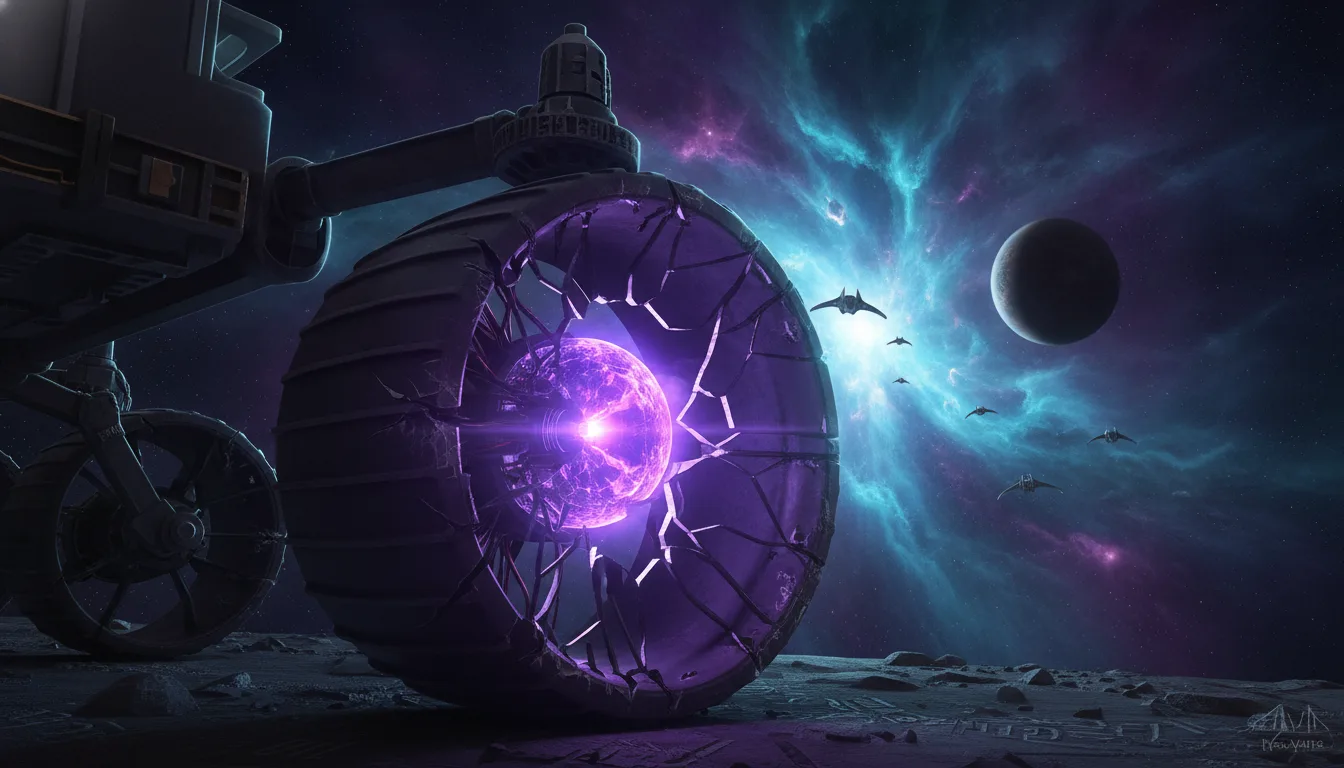
The image of Curiosity's wheel speaks volumes about the immense challenges of Mars exploration. The rough, rocky terrain of Gale Crater, combined with the rover's substantial weight, has inevitably taken its toll. Yet, this wear and tear are not unforeseen. NASA and JPL engineers have meticulously monitored the wheels' condition over the years. As a 2024 statement from the agency affirmed, despite the visible holes and cracks, the wheels are "holding up well despite taking some of the worst abuse from Mars." This ongoing resilience underscores the extraordinary foresight and material science invested in the rover's construction, allowing it to continue its vital scientific endeavors far beyond its initial design life.
Unveiling Ancient Martian Life and Space Mysteries
Curiosity's primary mission has been to assess Mars' habitability, specifically searching for environments that could have supported microbial extraterrestrial life in the distant past. Its exploration of Gale Crater has yielded groundbreaking discoveries, revealing evidence of ancient lakes and rivers, and identifying key chemical ingredients necessary for life. Each mile traveled, each rock analyzed, brings us closer to understanding the planet's evolutionary history and addressing fundamental space mysteries about life beyond Earth. The data beamed back daily from Curiosity, alongside its sibling rover Perseverance, represents an unparalleled flow of information, painting an ever-clearer picture of our planetary neighbor.
Paving the Way for Humanity's Interplanetary Future
The sustained operation of rovers like Curiosity is more than just a scientific pursuit; it's a foundational step in humanity's aspiration to become an interplanetary species. The practical lessons learned from operating these sophisticated robots in an alien environment – from navigating treacherous terrain to managing power and communications over vast distances – are invaluable. They are laying the groundwork for future human missions to Mars, informing everything from spacecraft design to astronaut safety protocols. While they may not be flesh and blood, Curiosity and Perseverance embody our collective spirit of exploration, pushing the boundaries of what's possible and inspiring generations to look to the stars. The images of Curiosity's battle-scarred wheels are a powerful symbol of our enduring quest for knowledge, echoing humanity's persistent drive to explore the cosmos and unravel its profound secrets.

0 Comments
Login to leave a comment.