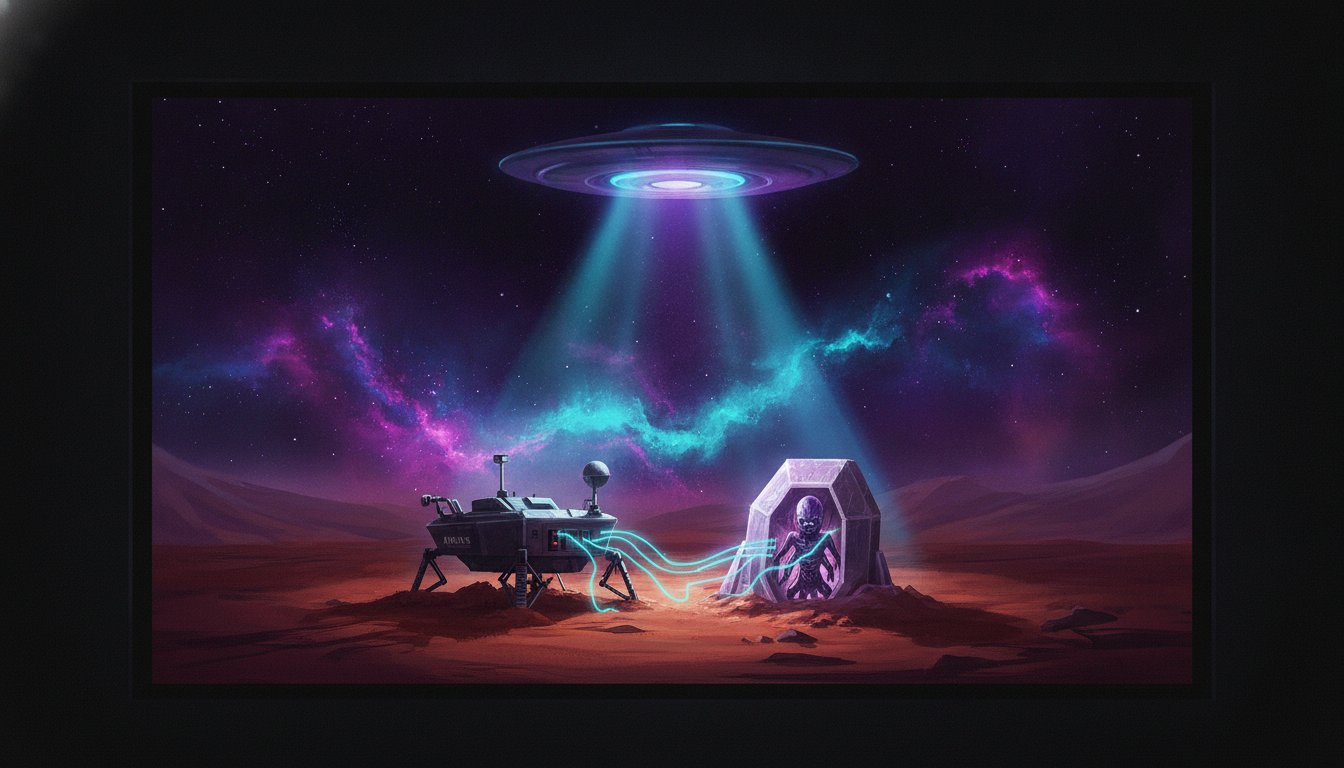
Unearthing Martian Mysteries: The Legacy of NASA's Phoenix Mars Lander
On August 4, 2007, a pivotal moment in humanity's quest to understand life beyond Earth unfolded as NASA launched its Phoenix Mars Lander. This robotic spacecraft embarked on a critical mission: to meticulously search for environments on the Red Planet that could harbor microbial life and to unravel the complex history of water on Mars. Its journey and subsequent discoveries have profoundly shaped our understanding of Mars's past and its potential to support life, adding another layer to the grand tapestry of space mysteries that continually beckon us.
The Phoenix Rises: A Mission Reborn
The very name "Phoenix" carried a profound symbolic weight, signifying a rebirth from the ashes of past challenges. This mission was, in essence, one of NASA's most ambitious "do-overs." Its genesis traced back to the agency's ill-fated 2001 Mars Surveyor lander project, which itself was canceled in the wake of the devastating loss of the Mars Polar Lander during an attempted touchdown in 1999. Undeterred by these setbacks, NASA repurposed the 2001 Mars lander's design, transforming it into a specialized Martian arctic explorer. It was equipped with an enhanced suite of scientific instruments, superior to those that had flown on its ill-fated predecessor. This resilience underscored humanity's persistent drive to explore the cosmos and unravel the secrets held within other worlds, a spirit essential in the broader search for extraterrestrial races or signs of ancient alien contact.
A Challenging Journey to the Red Planet
The launch itself was a spectacle of human ingenuity and power. At approximately 5:30 a.m. ET on that fateful August day, the Phoenix Mars Lander soared skyward atop a Delta II rocket from what is now Cape Canaveral Space Force Station in Florida. The spacecraft then embarked on an arduous nearly ten-month voyage across the vast expanse of space, meticulously navigating its path to Mars.
Upon its arrival in May 2008, Phoenix executed a flawless landing in the arctic plains of Mars, a region known as Vastitas Borealis. This landing pushed the boundaries of Martian exploration, positioning Phoenix farther north than any spacecraft had ventured before. This strategic choice was paramount to its mission, as these polar regions were hypothesized to be prime locations for discovering subsurface water ice.

Unveiling Martian Secrets: Water and Perchlorate
Phoenix's operational phase on Mars delivered groundbreaking discoveries that reshaped our understanding of the planet. Employing its sophisticated robotic arm, the lander meticulously dug into the frigid Martian dirt, confirming the long-suspected existence of subsurface water-ice. This direct confirmation was a monumental step, providing tangible evidence of one of life's most fundamental prerequisites on another celestial body.
Beyond water-ice, Phoenix made an even more intriguing find: what appeared to be small globs of liquid water. While transient and likely brine, the presence of liquid water, even in minute quantities, ignited new possibilities for the persistence of microbial life in the Martian environment. This discovery further fueled the ongoing scientific discussion about whether Mars could have harbored life in the past, or even present, raising profound questions about the potential for extraterrestrial life within our own solar system.
Perhaps the mission's most significant and complex discovery was the identification of perchlorate in the Martian regolith. This oxidizing chemical presents a fascinating duality: it can serve as a food source for certain types of microbes, yet it can also be toxic to others. The presence of perchlorate introduces a critical variable into the equation of Martian habitability, suggesting that any potential Martian life forms would need to possess specific adaptations to thrive in such an environment. This finding is crucial for astrobiologists seeking to understand the unique conditions under which life might emerge on other planets, contributing to the broader narrative of space mysteries.
The End of a Pioneering Mission
Designed to operate for a mere three months, the Phoenix Mars Lander valiantly defied expectations, extending its mission for an additional two months. However, the unforgiving Martian winter ultimately claimed the pioneering spacecraft. In November 2008, after battling increasingly harsh conditions and diminishing sunlight for its solar panels, Phoenix fell silent. Subsequent images captured from orbit by NASA's Mars Reconnaissance Orbiter revealed the probable cause: severe ice damage to one of its vital solar panels, effectively ending its historic exploration.
Though its operational lifespan was relatively brief, the Phoenix Mars Lander left an indelible mark on planetary science. Its direct detection of water-ice, hints of liquid water, and the discovery of perchlorate provided invaluable data that continue to inform future Mars missions, including those aimed at finding definitive evidence of past or present extraterrestrial life. The mission’s legacy ensures its place as a testament to human curiosity, scientific rigor, and the relentless pursuit of answers to the cosmic question: "Are we alone?"




0 Comments
Login to leave a comment.