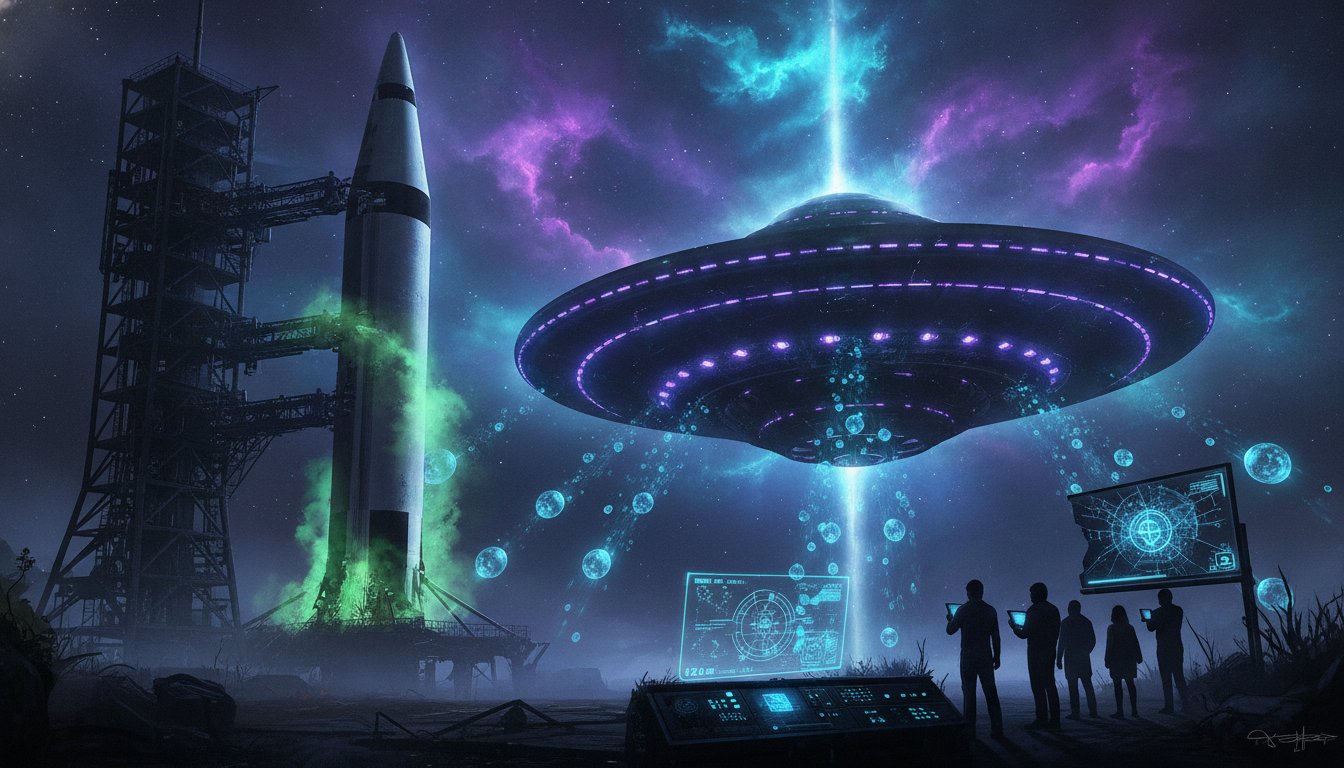
The Unexpected End of an Icon: NASA Cancels Saturn V Production
On August 1, 1968, as humanity stood on the cusp of its greatest leap into the cosmos, NASA made a pivotal and, for many, surprising decision: the cancellation of its mighty Saturn V moon rocket production. This wasn't merely a bureaucratic footnote; it was a moment that reshaped the trajectory of American space exploration, ending an era before its most celebrated triumphs had even occurred. At the time of the cancellation, nearly a year before Apollo 11 astronauts Neil Armstrong and Buzz Aldrin would make their historic moonwalk, the Saturn V was unparalleled. It was the only launch vehicle ever to have propelled humans beyond low-Earth orbit, a true titan of rocket technology and the most powerful heavy-lift rocket ever built.
The Colossus of the Cosmos: Unpacking the Saturn V's Might
The Saturn V was an engineering marvel, a three-stage liquid-propellant super heavy-lift launch vehicle developed by NASA under the direction of Wernher von Braun and his team. Standing an imposing 363 feet (111 meters) tall – taller than the Statue of Liberty – and capable of lifting over 100,000 pounds (45 metric tons) to the Moon, its sheer scale was breathtaking. It was the bedrock of the Apollo program, designed specifically to deliver astronauts and their command/service modules to lunar orbit. NASA managed to construct 15 of these behemoths, with 13 ultimately taking to the skies, each launch a testament to human ingenuity and ambition.
A Decision Forged in Fiscal Fire
The decision to cease production, despite the Saturn V's undeniable success and critical role in space exploration history, was driven by forces far removed from the launchpad. The late 1960s were a turbulent time for the United States. A burgeoning federal budget deficit, exacerbated by the escalating costs of the Vietnam War, placed immense pressure on government spending. President Lyndon Johnson's initial allocations for the Apollo program faced severe cuts from Congress, nearly three-quarters of the proposed funding slashed. This financial reality meant that even a program as prestigious and vital as the lunar landing mission had to confront budgetary constraints. The staggering cost of developing the Saturn family of rockets, which included the Saturn I and Saturn IB blocks, amounted to approximately $9.4 billion in contemporary dollars – an estimated $118 billion when adjusted for inflation today. This massive investment, while yielding incredible results, ultimately proved unsustainable for continued mass production in the political climate of 1968.
The Legacy of Limited Launches and a New Era
The abrupt end to Saturn V production meant that NASA had a finite number of these powerful rockets remaining. This effectively capped the number of lunar missions the Apollo program could undertake. The final Saturn V to carry astronauts into space did so in 1972, launching the Apollo 17 crew on the last human journey to the Moon. Just a year later, in 1973, another Saturn V, originally intended for the canceled Apollo 18 mission, found a new purpose, propelling the Skylab space station into orbit. The era of the NASA moon rocket concluded with Skylab, though its smaller sibling, the Saturn IB, launched the Apollo command module for the joint Apollo-Soyuz Test Project in 1975.
For decades, no rocket emerged to truly rival the Saturn V's payload capacity and power. This gap underscored the unique achievement and the premature ending of the program. It wasn't until 2022, with the maiden flight of NASA's Space Launch System (SLS) on the Artemis I mission, that the agency once again commanded a megarocket capable of deep-space human exploration. The SLS, a spiritual successor to the Saturn V, carried the uncrewed Orion capsule around the Moon. Looking ahead, the Artemis II mission, slated for April 2026, will send astronauts around the Moon, marking a significant return to lunar human space exploration.
Beyond NASA, private entities like SpaceX have also entered the heavy-lift rocket arena. Their Starship and Super Heavy booster system promises to surpass the Saturn V in sheer power and payload capacity, heralding a new frontier in rocket technology and access to space.
Enduring Echoes of a Space Age Giant
The cancellation of the Saturn V production in 1968 remains a poignant reminder of the complex interplay between scientific ambition, political will, and economic realities. Despite its early termination, the Saturn V carved an indelible mark in space history, powering humanity's first steps onto another celestial body. Its legacy continues to inspire, pushing engineers and dreamers alike to develop the next generation of space launch systems and unlock the universe's many space mysteries. The journey to the stars is expensive, but the spirit of exploration, first powerfully ignited by rockets like the Saturn V, remains undimmed.



0 Comments
Login to leave a comment.