
SpaceX Continues Starlink Expansion with Record Falcon 9 Launch from California
On August 8, 2026, the aerospace pioneer SpaceX once again demonstrated its unwavering commitment to global connectivity and space innovation with a successful Starlink mission. From the picturesque Vandenberg Space Force Base in California, a Falcon 9 rocket majestically ascended into the skies at precisely 12:35 p.m. EDT (1635 GMT; 9:35 a.m. local time), carrying a crucial payload of 24 Starlink internet-beaming satellites into low Earth orbit (LEO). This launch not only marked another significant stride in building the world's largest satellite constellation but also highlighted the remarkable reusability of SpaceX's cutting-edge rocketry.
A Testament to Reusable Rocket Technology
The heart of this mission's triumph lay in the performance of the Falcon 9's first stage booster, designated B1093. Approximately 8.5 minutes after liftoff, in a now-familiar ballet of precision engineering, the booster executed a flawless return to Earth. It gently touched down on the autonomous droneship "Of Course I Still Love You," stationed in the vast Pacific Ocean. This remarkable recovery marked B1093's 16th successful flight, an incredible testament to the durability and efficiency of SpaceX’s reusable rocket program. This particular booster has been a workhorse, with its most recent prior flight on July 14, 2026, when it launched 27 Starlink satellites, also from Vandenberg. Such frequent reuse dramatically reduces launch costs and increases access to space, fundamentally altering the economics of space exploration and deployment.
Meanwhile, the Falcon 9's upper stage continued its precise trajectory, ferrying the 24 Starlink satellites to their designated orbital altitude. The deployment occurred as planned, approximately 61 minutes after the initial liftoff, effectively integrating these new spacecraft into the burgeoning Starlink network.
Starlink: Bridging the Global Digital Divide
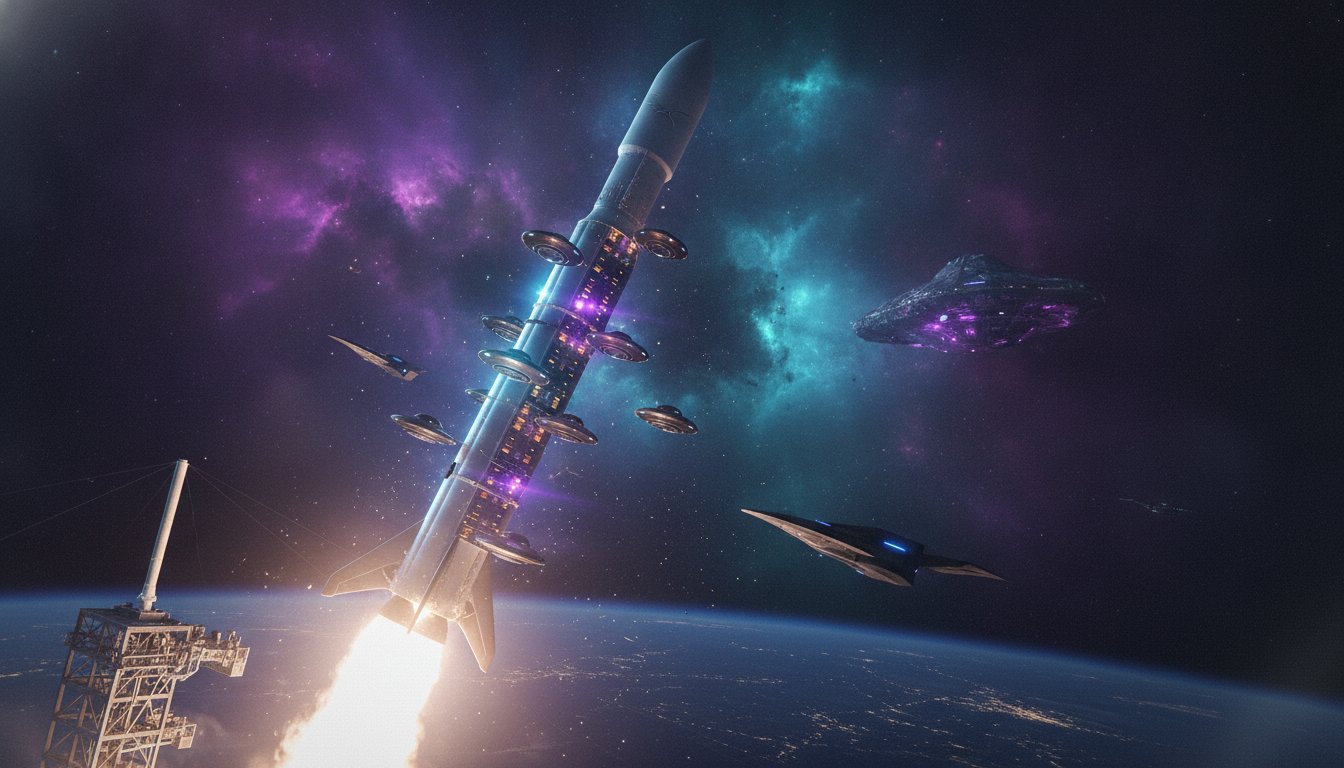
The primary objective of the Starlink megaconstellation is to provide high-speed, low-latency broadband internet access to underserved and remote areas across the globe. By blanketing the Earth in a vast network of interconnected satellites, SpaceX aims to eliminate geographical barriers to internet access, fostering educational, economic, and social opportunities for billions. This August 8th mission was the 71st Starlink-dedicated launch of 2026, contributing to an already colossal network. With over 10,900 active satellites currently orbiting our planet, Starlink stands as by far the largest orbiting network ever assembled, a true marvel of modern engineering. The continuous expansion reflects an ambitious vision to ensure truly global connectivity, an undertaking that has profound implications for how humanity communicates and interacts.
Paving the Way for Deeper Space Exploration
While the immediate goal of Starlink is terrestrial connectivity, its rapid deployment and the underlying advancements in rocket technology have broader implications for humanity's long-term endeavors in space. The ability to launch payloads consistently and cost-effectively, demonstrated by the B1093 booster's 16th flight and the 92nd Falcon 9 liftoff of 2026, is foundational for future cosmic exploration. Reliable access to space is not just for internet satellites; it's for scientific probes, crewed missions to the Moon and Mars, and sophisticated observatories designed to unlock the universe's most profound space mysteries.
The infrastructure and operational expertise gained from projects like Starlink are indispensable for venturing further into the cosmos, seeking answers to humanity's oldest questions about our place among the stars. As our technological capabilities expand through such missions, the potential to study distant phenomena, gather unprecedented data, and perhaps even glimpse signs of other civilizations grows ever stronger. This relentless push into low Earth orbit and beyond solidifies humanity's evolving role as a spacefaring species, laying the groundwork for future discoveries that could reshape our understanding of the universe.
The Future is Orbital
SpaceX's consistent launch cadence and its pioneering spirit continue to redefine what is possible in space. Each Starlink launch is more than just a satellite deployment; it represents a step forward in global connectivity, sustainable space operations, and the long-term vision of humanity's expansion into the solar system. As the Starlink constellation continues its remarkable growth, it not only promises to connect the disconnected but also serves as a crucial stepping stone towards unlocking the greater cosmic mysteries that await beyond our home planet.




0 Comments
Login to leave a comment.