
Japan's H3 Rocket Soars with Michibiki 7: Advancing Global Navigation and Space Partnership
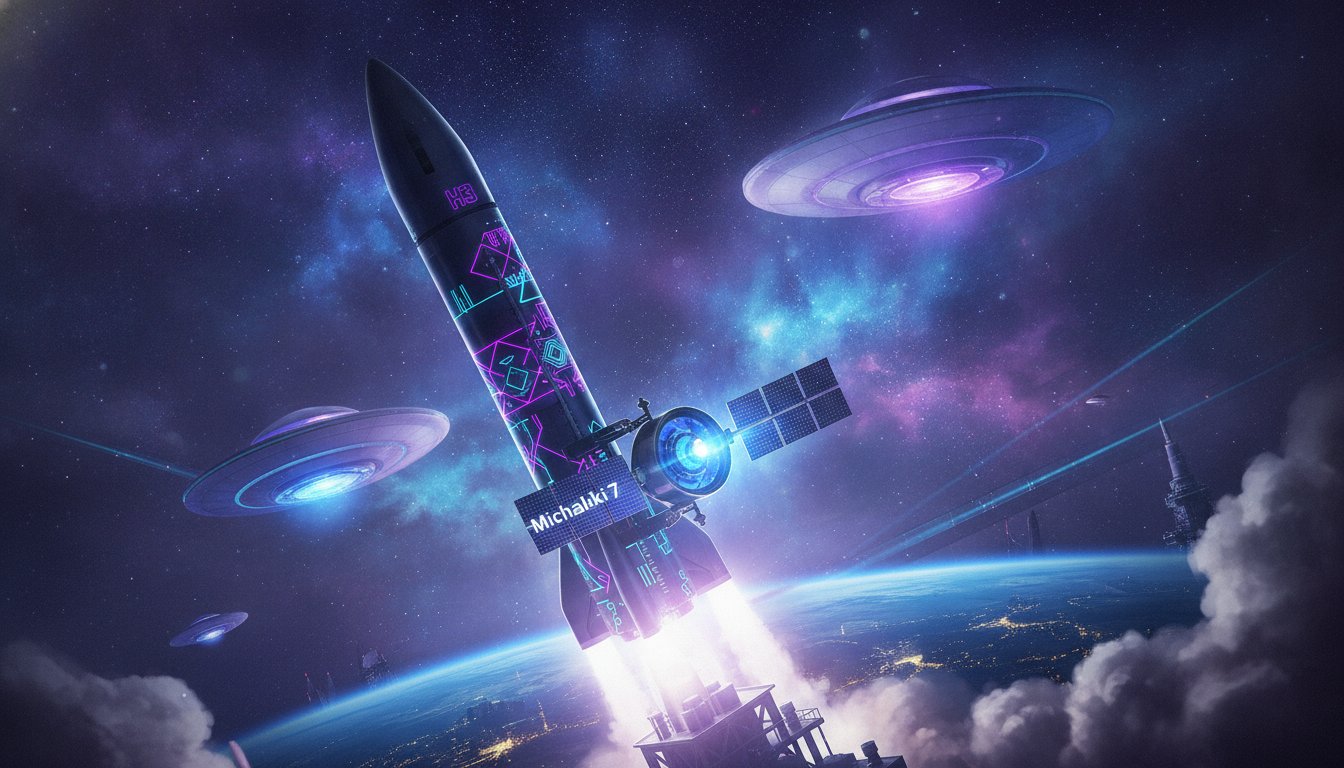
The vast expanse of space continues to be a frontier of innovation and international cooperation, a fact underscored by Japan's recent H3 rocket launch. On August 10, from the Tanegashima Space Center, the H3 successfully propelled the Michibiki 7 navigation satellite into orbit, marking another critical milestone for the Japan Aerospace Exploration Agency (JAXA) and solidifying Japan's independent role in global space infrastructure.
The H3 Rocket: A Testament to Resilience and Innovation
The H3 rocket, a formidable two-stage vehicle standing between 187 and 207 feet tall depending on its payload configuration, represents the future of Japan's heavy-lift launch capabilities. It is the designated successor to the venerable H-2A rocket, which concluded its illustrious 50-flight career last year. The H3's journey has been one of both ambition and challenge since its debut in March 2023.
Out of its nine total liftoffs, two have experienced setbacks, including its inaugural flight and the attempted launch of Michibiki 5 in December of the previous year. However, JAXA’s commitment to innovation and engineering excellence has seen the H3 bounce back with remarkable resilience. A successful mission on June 11 delivered six satellites into orbit, demonstrating the program’s robust recovery and capability. This latest launch of Michibiki 7 further cements the H3's reliability as Japan's premier heavy-lift launcher.
Michibiki 7 and the QZSS: Precision Navigation from the Zeniths
The primary payload for this mission, Michibiki 7, is an integral component of Japan's Quasi-Zenith Satellite System (QZSS). This sophisticated homegrown navigation system operates in a high geosynchronous orbit, providing highly accurate positioning, navigation, and timing (PNT) services. QZSS is not just a standalone system; it is designed for seamless compatibility with existing GPS satellites, allowing for integrated usage that enhances precision and reliability.
Japanese officials emphasize the system's particular advantage in the Asia-Oceania regions, where its unique orbital paths ensure improved signal reception even in urban canyons and mountainous terrain. The QZSS network is an ambitious endeavor, with plans to eventually comprise 11 satellites. Currently, five such spacecraft are operational, with Michibiki 7 significantly advancing this crucial constellation towards its full potential.
International Cooperation: A U.S. Payload for Orbital Vigilance
Beyond its national importance, the Michibiki 7 mission also highlights a deepening international partnership in space. Aboard the satellite is the Situational Awareness Camera Hosted Instrument (SÃCHI), a crucial payload developed for the U.S. Space Force by the renowned MIT Lincoln Laboratory. This represents the second SÃCHI instrument to be launched on a QZSS satellite, following the one aboard Michibiki 6, which notably launched in February 2025—an interesting sequence given Michibiki 5's earlier launch attempt.
The SÃCHI program is vital for global space security. According to Mark Huber, a technical staff member at MIT Lincoln Laboratory, it will enable the United States to "monitor satellite behavior within the GEO belt over a very interesting part of the world." Furthermore, this collaboration serves as a "pathfinder," establishing critical methods for sensitive data sharing between the United States and Japan, reinforcing their strategic alliance in the burgeoning domain of space situational awareness.
Japan's Ascent in the Space Age
The successful launch of Michibiki 7 by the H3 rocket is more than just another orbital deployment; it is a powerful statement about Japan's advancing capabilities in space technology. From developing a resilient new rocket system to building out a sophisticated navigation network and fostering critical international collaborations, Japan is unequivocally carving out a pivotal role in the future of space exploration and global infrastructure. As the QZSS constellation grows and partnerships like the SÃCHI program deepen, the insights gained from these missions will undoubtedly contribute to a safer, more connected, and more navigable world.



0 Comments
Login to leave a comment.