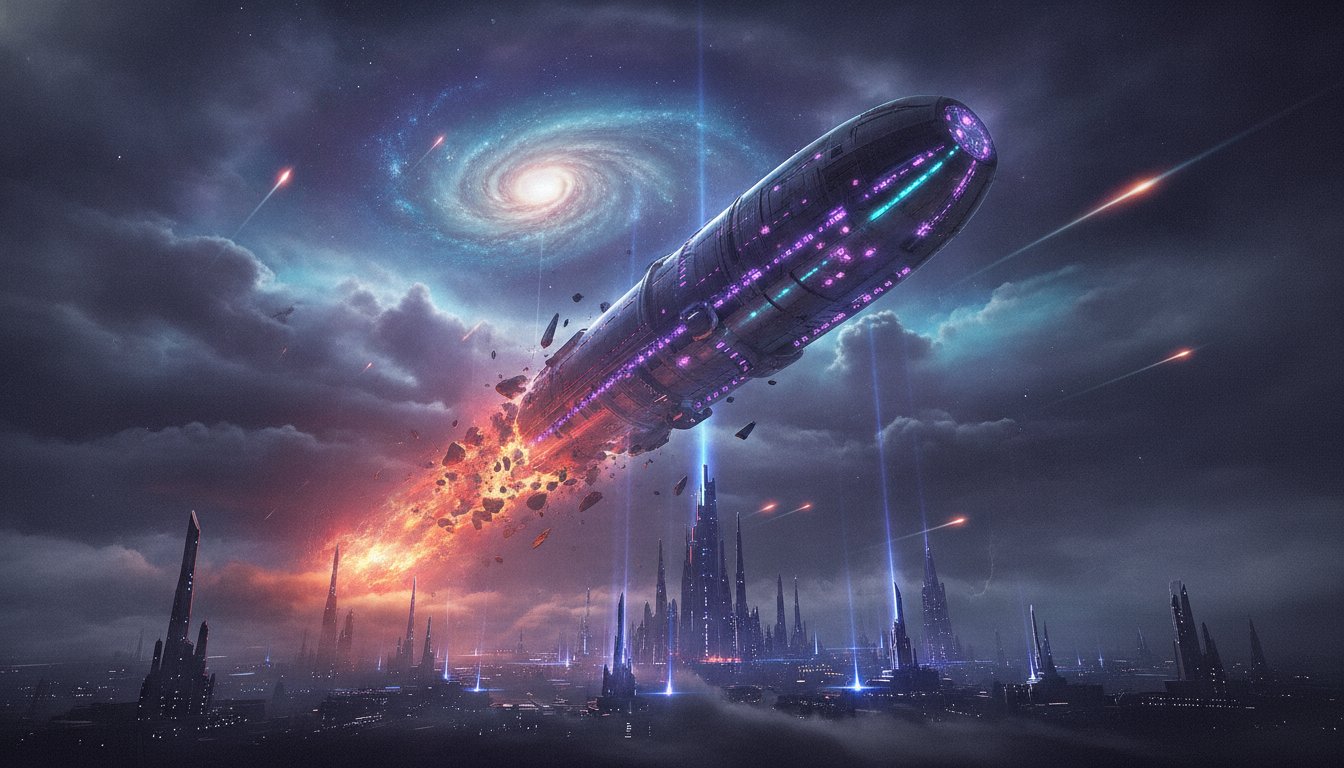
The Great Daylight Fireball of 1972: A Celestial Spectacle and Enduring Space Mystery
Imagine looking up into the bright, sunlit sky and witnessing a celestial phenomenon so profound and brilliant that it outshines the sun itself. Such was the breathtaking reality for millions across North America on August 10, 1972, when a monumental object—later dubbed the 'Great Daylight Fireball'—streaked across the heavens. This wasn't a fleeting meteor shower of tiny dust particles, but a substantial space rock, or possibly an icy comet, that engaged in a dramatic, 100-second dance with Earth's atmosphere without ever touching ground.
An Unprecedented Atmospheric Encounter
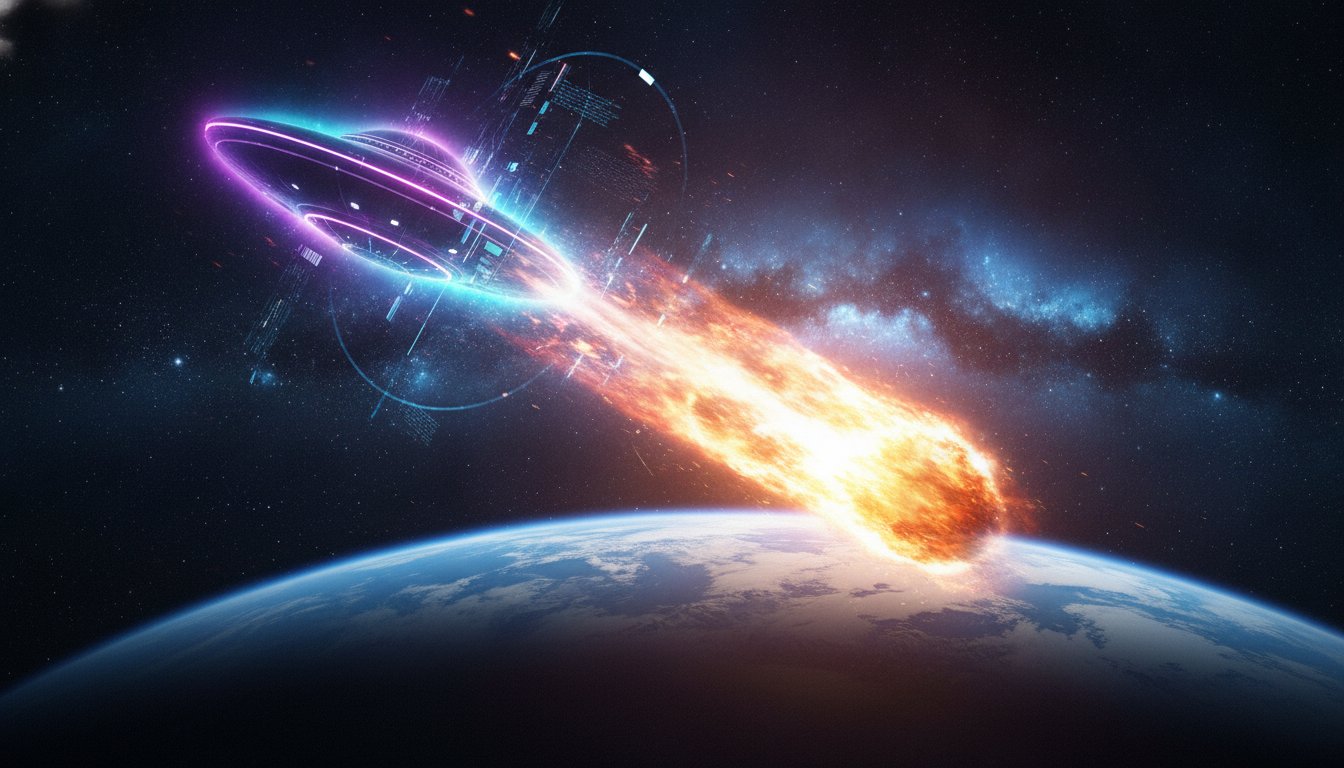
The event began as the massive fireball entered Earth's atmosphere somewhere over Utah. From there, it continued its electrifying journey northwards, finally exiting the atmosphere over Alberta, Canada, leaving a luminous trail in its wake. This peculiar type of event is known as an 'Earth-grazing meteor,' a rare phenomenon where a celestial body dips into our atmosphere at a shallow angle and then skips back out into space, much like a stone skipping across water. Unlike objects that plunge directly towards impact, a grazer offers a prolonged and highly visible display.
Scientific analysis of its trajectory later estimated the object to be between 10 to 45 feet (approximately 3 to 14 meters) in diameter. The exact size depended on its composition: a larger estimate if it were a less dense, icy comet, or a smaller one if it were a denser, rocky asteroid. Regardless of its exact nature, its sheer scale and close proximity made it an unparalleled spectacle that etched itself into the memories of those who witnessed it.
Beyond the Night Sky: The Significance of a Daytime Fireball
Most people are familiar with 'shooting stars'—the brief, beautiful streaks of light caused by tiny dust particles burning up in the night sky. These are relatively dim, often outshone by city lights or a full moon. However, a daytime fireball is an entirely different caliber of event. For an object to be visible and incredibly bright in broad daylight, it must possess substantial size, velocity, and energy, generating immense heat and light as it rips through the atmosphere. The 1972 fireball was so luminous that it appeared brighter than the sun, a truly awe-inspiring and slightly terrifying demonstration of cosmic power.
Such events are extraordinarily rare, offering scientists invaluable data on the composition, speed, and behavior of near-Earth objects. They are crucial for understanding the potential threats and wonders that populate our cosmic neighborhood, deepening our knowledge of the vast 'space mysteries' that surround our planet.
Witnessing the Unidentified: Then and Now
In 1972, the world was a very different place. Without the ubiquitous presence of personal cameras and the internet, documentation of such extraordinary events was limited. While a few eyewitness accounts and at least one reported video exist, the scale of documentation pales in comparison to what would transpire today. Had the Great Daylight Fireball occurred in the modern era, social media would undoubtedly be flooded with countless images, videos, and real-time reports from millions of witnesses across two nations. This underscores how our ability to record and share 'UFO sightings'—or any unidentified aerial phenomena—has evolved dramatically.
Even though the 1972 event was swiftly identified as a natural celestial body, its appearance in the daytime sky, unannounced and spectacular, could easily have fueled speculation had scientific understanding been less advanced, or if it had been less clearly tracked. It serves as a powerful reminder of how awe-inspiring and sometimes perplexing the natural universe can be, even as we strive to uncover all its secrets.
Unlocking Space Mysteries: Scientific Insights from a Near Miss
The Great Daylight Fireball offered more than just a spectacular show; it provided a unique opportunity for scientific study. Earth-grazing events are pivotal for planetary defense, allowing researchers to refine models of asteroid and comet trajectories and atmospheric interactions. By analyzing the composition and behavior of such objects, scientists can better understand the potential risks posed by near-Earth objects and develop strategies for mitigation, ensuring the safety of our planet from future cosmic encounters.
This event underscored the fact that Earth exists within a dynamic, bustling solar system, constantly interacting with debris left over from its formation. It's a vivid illustration of the ongoing cosmic dance, a continuous stream of 'space mysteries' waiting to be unraveled through observation, research, and advanced technology. The 1972 fireball remains a landmark event, a testament to the raw power and beauty of the cosmos, reminding us of our place in an expansive and ever-evolving universe.
A Timeless Reminder of Our Cosmic Journey
The Great Daylight Fireball of 1972 was more than just a passing light show; it was a potent reminder of the breathtaking, sometimes perilous, wonders of space. It highlighted the sheer scale of the cosmos and the incredible forces at play, often unseen, that govern our corner of the universe. As humanity continues its quest to explore the stars and understand the profound 'space mysteries' that define our existence, events like this serve as powerful touchstones, inspiring both scientific inquiry and a deep sense of cosmic awe. It reminds us that even in broad daylight, the universe holds spectacular secrets ready to reveal themselves.
0 Comments
Login to leave a comment.