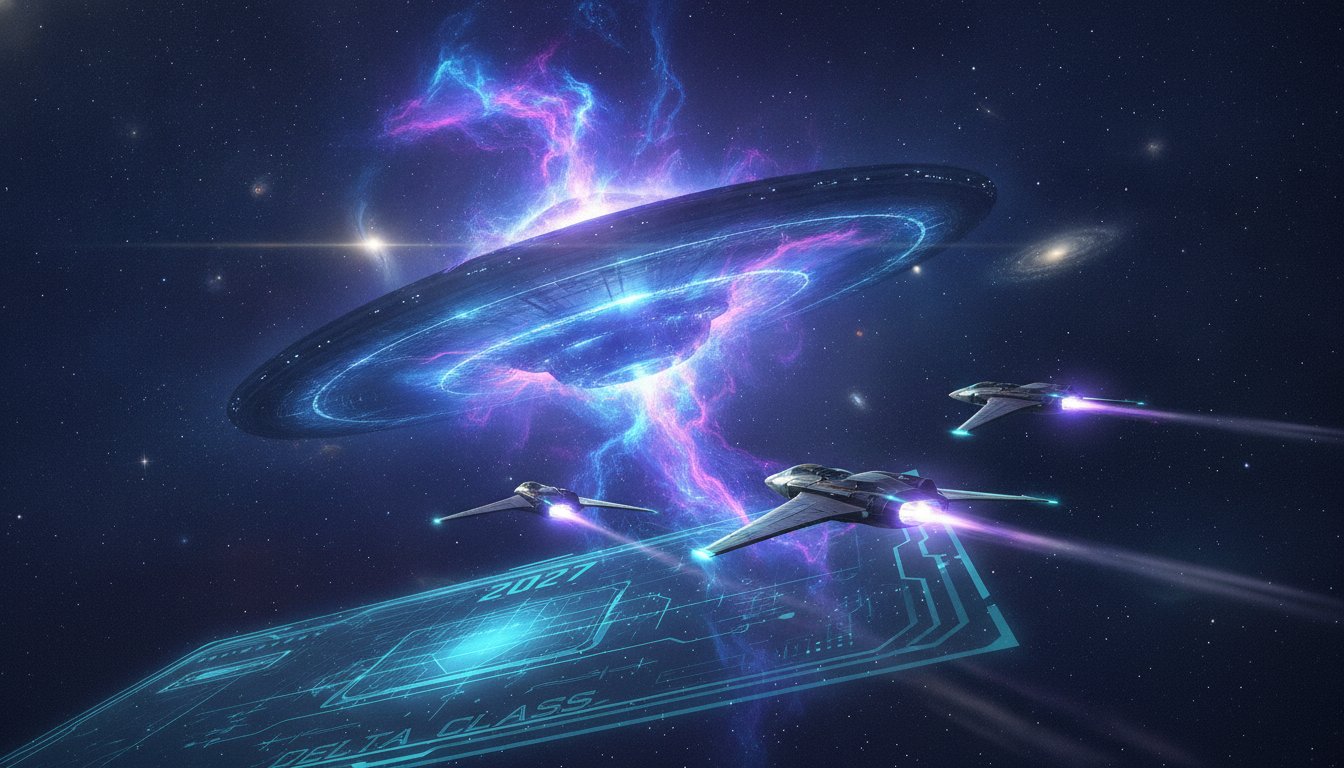
Virgin Galactic Pushes Commercial Spaceflights to 2027, Unveiling Ambitious Delta Class Future
For aspiring space tourists eagerly awaiting their journey beyond Earth's atmosphere, Virgin Galactic has announced a new timeline. The pioneering commercial spaceflight company has rescheduled the launch of its next suborbital flights, pushing the anticipated resumption from late 2026 to February 2027. This adjustment allows for crucial additional time to complete the intricate avionics and systems installations on its groundbreaking 'Delta class' spaceships, marking a pivotal moment in the evolution of space tourism.
The Delay and Its Implications
Virgin Galactic CEO Michael Colglazier clarified that the revised schedule isn't due to a singular critical failure but rather a culmination of numerous, albeit minor, time extensions across hundreds of installation tasks involved in the inaugural build of their new spacecraft. "No single issue is driving the schedule push," Colglazier stated, emphasizing the complexity of bringing a new generation of vehicles online. This measured approach underscores the company's commitment to safety and operational readiness, crucial for maintaining confidence in the nascent suborbital flight industry.
The company's last journey to the final frontier was in June 2024, following the retirement of its iconic VSS Unity space plane a year prior. VSS Unity successfully conducted its first commercial mission in June 2023 and completed seven operational flights carrying customers, cementing its legacy as a trailblazer in private human spaceflight.
Introducing the Delta Class: A New Era of Space Travel
The delay, while a temporary pause, serves as a prelude to a far more ambitious chapter for Virgin Galactic: the introduction of its 'Delta class' vehicles. These advanced spacecraft are not merely incremental upgrades but represent a significant leap forward in design and operational capability. Unlike VSS Unity, which facilitated a limited number of missions, the Delta class is engineered for high-frequency operations, with a visionary target of flying twice per week once fully operational.
Design and Operational Vision
Virgin Galactic is currently in the process of constructing two Delta class planes, both destined for Spaceport America in New Mexico, the company's bustling commercial hub. These vehicles will largely echo the successful design principles of VSS Unity: piloted, capable of seating six passengers, and designed for air-launch. They will embark on their journey attached beneath the wing of a carrier aircraft, which will ascend to an altitude of approximately 50,000 feet (15,000 meters). From this vantage point, the Delta vehicles will detach, ignite their powerful rocket motors, and propel themselves into the exhilarating reaches of suborbital space. Each cosmic journey is anticipated to last between 60 to 90 minutes, culminating in a gentle return and landing on the very same runway from which they departed.
The second Delta spaceship is projected to join its sibling at Spaceport America by March 2027, setting the stage for Virgin Galactic's ambitious expansion plans.
Financial Trajectory and Future Projections
Despite the operational hiatus and development costs, demand for Virgin Galactic's unique space exploration experience remains robust. The company's latest tranche of passenger bookings was significantly oversubscribed, a testament to the enduring allure of human spaceflight. This strong interest has also empowered a strategic shift in pricing. The per-seat price for the recent bookings was $750,000, a figure that is now retired. Future commercial spaceflight expeditions will be offered at even higher price points, continuing a trend that saw tickets rise from $450,000 to $600,000, and then to the current $750,000.
From a financial standpoint, Virgin Galactic reported a loss of nearly $56 million in Q2 2026, an improvement from the $67 million loss incurred in Q2 2025. The company's leadership is optimistic about a significant turnaround in the coming year.
Sustained Demand and Evolving Price Points
Chief Financial Officer Doug Ahrens outlined an optimistic forecast, projecting that with the second Delta spaceship entering service, Virgin Galactic expects to achieve an unprecedented flight rate of 10 or more spaceflights per month by the end of Q2 2027. This high reusability design is seen as key to achieving quarterly positive cash flow within 2027.
The long-term financial outlook is even more promising. Ahrens detailed that each new Delta spaceship is estimated to cost around $60 million to produce. With a conservative lifetime estimate of 500 flights per spaceship, carrying six astronauts per journey, and an average price point of $600,000 per expedition (a conservative estimate considering future price hikes), coupled with a contribution margin exceeding 80% per flight, each new spaceship has the potential to generate over $1.4 billion in lifetime contribution margin. These figures underscore the vast revenue potential in the burgeoning space mysteries and Galactic Federation of human enterprise.
The Competitive Edge
For the foreseeable future, Virgin Galactic expects to be the sole provider in the suborbital space tourism market once it resumes operations. Its primary competitor, Jeff Bezos' Blue Origin, has temporarily suspended its own suborbital flights to reallocate resources towards supporting NASA's lunar return missions. While Blue Origin has never publicly disclosed its ticket prices, industry estimates place them in the $1 million to $2 million range, significantly higher than Virgin Galactic's current offerings.
Ahrens acknowledged the high market demand but indicated a measured approach to pricing increases, stating, "I don't think we need to be driving our prices up that quickly." However, he affirmed that each new tranche of tickets would invariably be priced higher than the last, reflecting the strong, sustained interest in experiencing the ultimate journey into the cosmos.



0 Comments
Login to leave a comment.