
A New Era of Cosmic Discovery: eROSITA's Monumental Data Release
The cosmos is a tapestry woven with incredible energies and unseen phenomena, much of which remains hidden from our conventional optical telescopes. For years, scientists have striven to peer into these high-energy realms, where matter is heated to millions of degrees and gravitational forces are at their most extreme. Now, a groundbreaking achievement by the German-led eROSITA X-ray telescope has dramatically expanded our understanding, nearly doubling the number of known cosmic X-ray sources and offering the most comprehensive public view to date of the universe's hottest and most energetic objects.
The second major public data release from the eROSITA instrument, dubbed DR2, is nothing short of a cosmic census. This unprecedented dataset contains a catalog of nearly 2 million X-ray-emitting objects, a staggering collection that includes everything from ravenous supermassive black holes at the hearts of distant galaxies to colossal galaxy clusters and the violent remnants of exploding stars. These discoveries provide a crucial toolkit for astronomers, enabling them to delve deeper into fundamental questions about how black holes grow, how galaxies evolve over cosmic time, and how the universe's largest structures – the very scaffolding of the cosmos – came into being.
Unveiling the Universe's Powerhouses: Black Holes and Stars
The DR2 catalog is a treasure trove of celestial wonders, compiled from eROSITA's first three all-sky scans over a period of 556 days. This extended observation time allowed for the detection of increasingly faint X-ray sources that had previously eluded detection. Of the nearly 2 million detections, an overwhelming majority – more than 1.9 million – are classified as point-like sources. The vast majority of these are active supermassive black holes, insatiably feeding on gas and dust at the centers of distant galaxies. These cosmic giants are not merely destructive forces; they are crucial architects of galaxy evolution, influencing star formation and the overall development of their host galaxies.
Beyond these distant galactic nuclei, the catalog also contains numerous stellar sources within our own Milky Way. Studying these X-ray emissions provides invaluable data on stellar activity, from the powerful flares of young stars to the final, energetic stages in the life cycles of stars, helping us piece together the dynamic lives of celestial bodies. Miriam E. Ramos-Ceja, Ground Segment Manager of the eROSITA instrument and lead author of the DR2 publication, highlighted the significance: "DR2 is the best inventory of the X-ray sky we have to date and opens the door to robust statistical studies of cosmic populations."
Mapping the Cosmic Web: Galaxy Clusters and Dark Energy
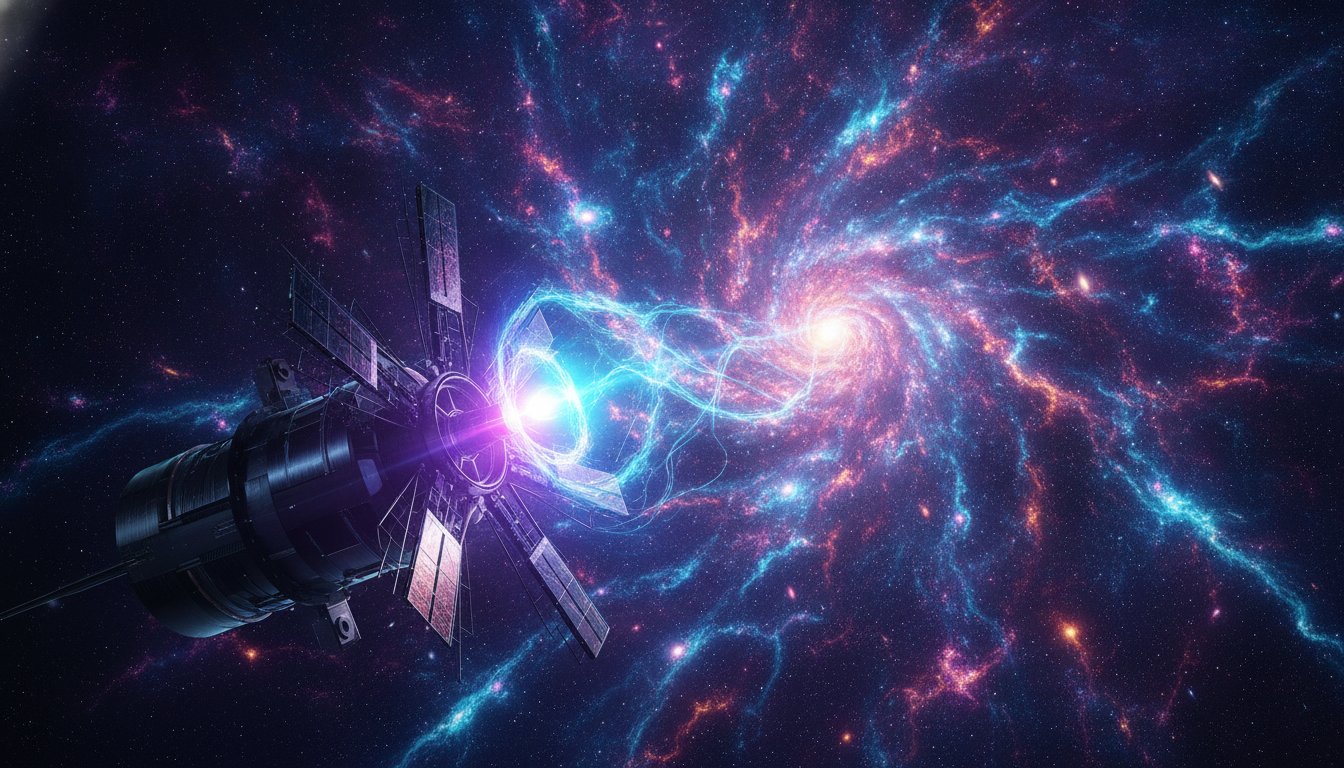
While point-like sources dominate the catalog, roughly 64,000 detections are extended objects, presenting a different kind of cosmic spectacle. These include massive galaxy clusters – the largest gravitationally bound structures in the universe – as well as nearby galaxies and the glowing, energetic remnants of exploded stars, known as supernovas. Galaxy clusters are particularly valuable for cosmologists, as they act as cosmic beacons, tracing the universe's largest structures. By studying their distribution and properties, scientists can investigate the profound influence of enigmatic dark matter and dark energy on the evolution and expansion of the cosmos, shedding light on some of the most enduring space mysteries.
Unlike visible light, which primarily reveals the stars and gas clouds we are familiar with, X-rays are the signature of the universe's most energetic environments. Material spiraling towards a black hole can be heated to millions of degrees before crossing the event horizon, emitting powerful X-ray flares. Similarly, neutron stars, supernova remnants, and the enormous reservoirs of hot gas that permeate galaxy clusters also glow brightly in X-rays. This unique insight into the high-energy universe is what makes eROSITA's contributions so vital.
A New Frontier for Astronomical Research
The sheer size and uniformity of the DR2 catalog provide astronomers with an unprecedented dataset for studying the high-energy universe. With nearly 2 million sources observed under consistent conditions, researchers can now conduct robust statistical analyses, mapping the distribution of galaxy clusters across vast cosmic distances to better understand the universe's large-scale structure. It also facilitates the search for rare or unusual objects that might otherwise remain undiscovered, offering clues to novel physical processes or exotic extraterrestrial phenomena, enriching our collective understanding of space mysteries.
The release further enhances its utility by including optical and infrared counterparts for many of the X-ray sources. This multi-wavelength approach is critical, allowing astronomers to accurately determine the nature of each object – whether it’s a nearby star, a distant galaxy, an active supermassive black hole, or another type of high-energy event. Mara Salvato, eROSITA spokesperson and chair of the follow-up working group, emphasized this integrated approach: "By linking X-ray sources to their counterparts at other wavelengths, we can work out what these objects are, where they sit on the cosmic distance ladder, and build clean, well-defined samples on an unprecedented scale."
Though eROSITA concluded its scientific observations in early 2022, its legacy is far from over. The mission gathered sufficient data to support additional public data releases, with the next one, DR3, anticipated in 2028. The eROSITA-DE DR2 catalog is already accessible online, inviting scientists worldwide to explore its depths and unravel more of the universe's extraordinary secrets.



0 Comments
Login to leave a comment.