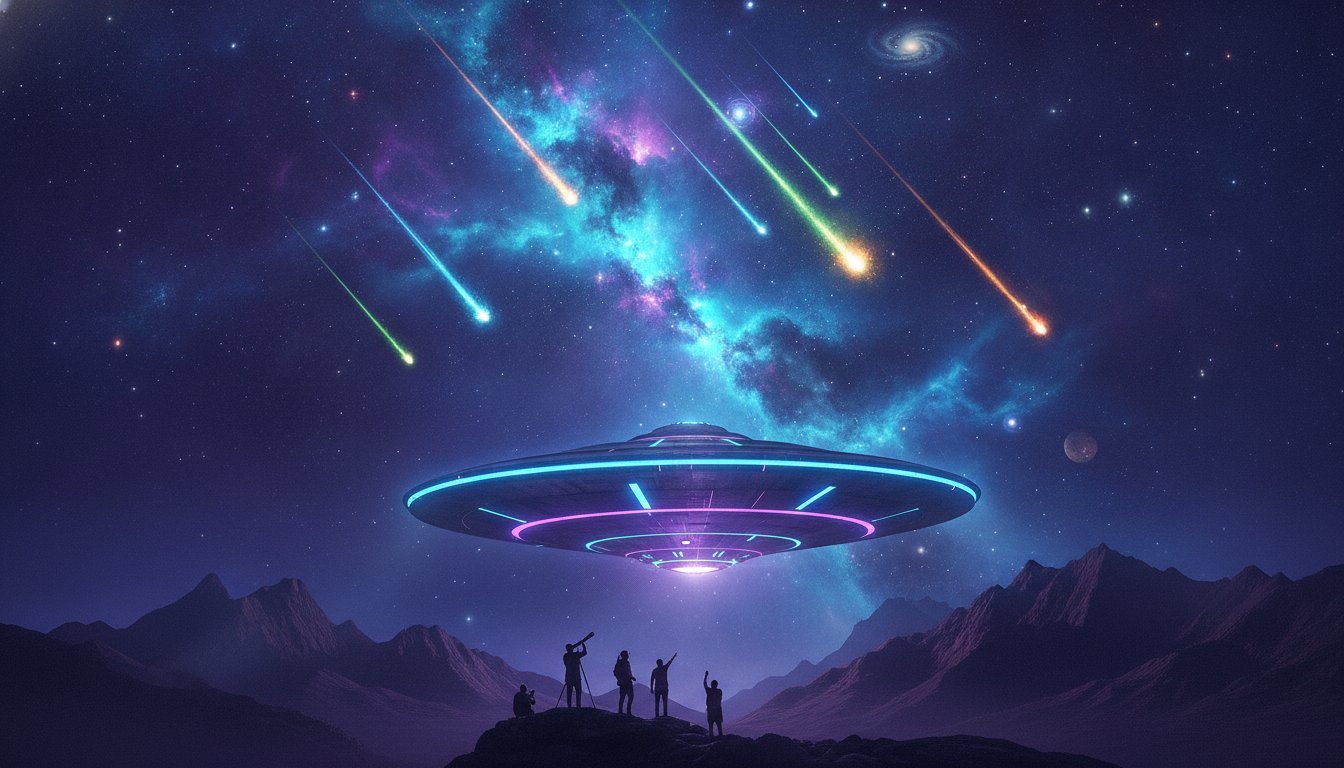
The Perseid Meteor Shower: A Celestial Spectacle Under Pristine Dark Skies
Every year, the cosmos treats Earth-bound observers to a breathtaking display known as the Perseid meteor shower. Widely celebrated as one of the most prolific and visually stunning meteor showers, this year's peak promises an especially magnificent show, thanks to an auspicious alignment with the new moon. With light pollution from our nearest celestial neighbor effectively eliminated, stargazers are poised to witness up to 100 meteors per hour under ideal conditions, transforming the night sky into a dazzling arena of cosmic dust and light.
Unveiling the Cosmic Ballet: What to Expect
This year’s Perseid peak is particularly favorable, coinciding with the night of a new moon. This crucial astronomical detail ensures that fainter meteors, often obscured by moonlight, will be vividly visible, enhancing the overall spectacle. For those eager to witness this celestial ballet, the prime viewing window commences around 11 p.m. local time, with activity steadily escalating after midnight. The most intense bursts of meteors, offering the highest rates per hour, are anticipated in the predawn hours. Patient observers under dark, clear skies could find themselves counting dozens of streaks across the heavens.
Journey to the Stars: Origin of the Perseids
The annual Perseid meteor shower is a testament to the persistent legacy of Comet 109P/Swift-Tuttle. As our planet embarks on its yearly orbit, it periodically intersects with the dusty trail left behind by this magnificent comet. These trails are not mere wisps of dust but rather dense streams of rocky debris, ranging in size from microscopic grains of sand to small pebbles. When these tiny fragments encounter Earth’s atmosphere, they do so at an astonishing velocity of approximately 133,000 mph (214,000 km/h).
Upon impact, the sheer speed causes the air in front of these particles to compress and heat dramatically, igniting the fragments high above Earth's surface. This incineration process creates the brilliant, ephemeral streaks of light we affectionately call meteors or 'shooting stars.' Each streak is a fleeting moment, a final blaze of glory for ancient cometary material journeying across the vastness of space before its ultimate fiery dissolution.
Maximizing Your Stargazing Experience
To fully immerse yourself in the Perseid spectacle, strategic planning is key. While the meteors appear to emanate from the constellation Perseus – hence their name – looking directly at the constellation is not necessary. In fact, some of the longest and brightest meteors are best observed about 45 degrees away from the radiant point, offering a broader and more dramatic perspective.
Essential Viewing Tips:
- Seek Darkness: Escape the pervasive glow of city lights. The darker your surroundings, the more fainter meteors you'll be able to discern.
- Allow for Adaptation: Give your eyes at least 30 minutes to adjust to the darkness. This enhances your night vision and sensitivity to subtle celestial phenomena. Avoid bright screens, which can reset this adaptation.
- Naked Eye is Best: Resist the urge to use telescopes or binoculars. Meteors are best appreciated with the naked eye, allowing for a wide field of view to catch their swift, arcing trajectories.
- Comfort is Key: Dress warmly and find a comfortable spot, perhaps a reclined chair or blanket, to avoid neck strain during prolonged skygazing sessions.
A Rare Celestial Conjunction: Double the Wonder
Adding an extra layer of mystique to this year's Perseid peak is its proximity to a total solar eclipse, which graced parts of Greenland, Iceland, and Spain just hours prior. While geographically distinct for most observers, the temporal convergence of two such spectacular celestial events within a single day underscores the dynamic and ever-unfolding nature of our universe. It serves as a powerful reminder of the intricate cosmic mechanics that govern our skies, inviting us to contemplate the grandeur beyond our earthly sphere.
For those who might miss the absolute peak, fret not. The Perseids remain active and observable through August 24th, continuing to offer opportunities to witness these captivating 'shooting stars' under clear, dark skies. Whether you're a seasoned astronomer or a curious novice, the Perseid meteor shower offers a profound connection to the ancient rhythms of space and the silent dance of cosmic debris, inviting us all to look up and marvel at the wonders above.
![[EN] SpaceX wraps Starlink double header day with the launch of 24 Starlink satellites from California](/uploads/-spacex-wraps-starlink-double-header-day-with-the-launch-of-24-starlink-satellites-from-california--cover-1786536042968.jpg)
0 Comments
Login to leave a comment.