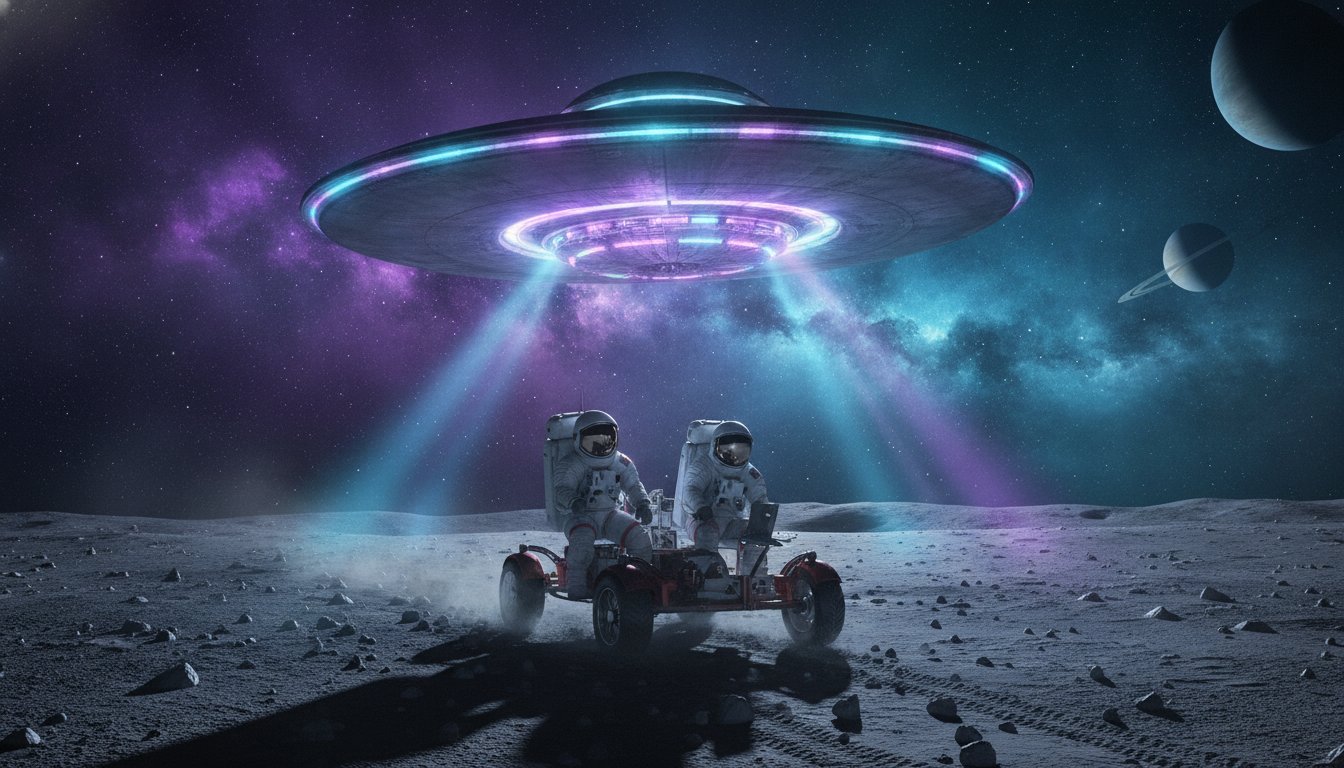
Apollo 15 and the Dawn of Lunar Mobility: The First Drive on the Moon
On a pivotal day in space history, July 31, 1971, humanity achieved an unprecedented feat: driving a vehicle on the surface of another celestial body. This groundbreaking moment was delivered by the Apollo 15 mission, marking a new era for lunar exploration and significantly expanding our understanding of Earth's closest neighbor. Commanders David Scott and Lunar Module Pilot James Irwin became the first celestial drivers, navigating the rugged lunar terrain in the innovative Lunar Roving Vehicle (LRV).
Unleashing the Lunar Rover: A Game-Changer in Exploration
Prior to Apollo 15, astronauts were limited to exploring areas within walking distance of their landing sites. The introduction of the LRV, often affectionately dubbed the "moon buggy," revolutionized this paradigm. Conceived as a high-tech utility vehicle, the LRV was ingeniously designed to be foldable and compact, allowing it to be stowed within the Apollo 15 lunar module, the Falcon. Upon deployment, it unfolded to impressive dimensions: approximately 10 feet long, 7 feet wide, and 45 inches high.
The engineering challenges behind the LRV were considerable. NASA needed a vehicle that was not only lightweight enough to be transported to the moon but also robust enough to withstand the extreme lunar environment and carry a significant payload. Boeing rose to the challenge, constructing a lightweight aluminum frame powered by batteries, capable of carrying two astronauts and up to 1,080 pounds (490 kg) of cargo – an astounding twice its own weight. This technological marvel could achieve speeds of up to 8.6 miles per hour, dramatically extending the operational range of the astronauts.

The Historic Expedition of Apollo 15
The Apollo 15 mission commenced its journey to the moon on July 26, 1971, with the lunar module landing on July 30. While Command Module Pilot Al Worden orbited above, Scott and Irwin embarked on three historic moonwalks. Their first drive in the LRV took them to Elbow Crater, a strategic location chosen for its scientific potential. Here, they meticulously gathered geological samples and captured invaluable photographic data, pushing the boundaries of what was previously possible in lunar surface science.
Over their three days of lunar surface exploration, Scott and Irwin covered an impressive distance of more than 17 miles, far surpassing the range of any previous Apollo mission. This extended mobility allowed them to investigate a wider variety of geological features, providing a richer collection of data and samples that continue to inform lunar science today. The mission concluded with the crew departing the lunar surface on August 2, leaving lunar orbit on August 4, and finally splashing down in the Pacific Ocean on August 7, bringing home a wealth of new discoveries.
A Legacy of Innovation and Future Endeavors
The Lunar Roving Vehicle was more than just a means of transport; it was a symbol of human ingenuity and a testament to the relentless pursuit of space exploration. Its success on Apollo 15 paved the way for its use in subsequent missions, Apollo 16 and Apollo 17, with all three original LRVs remaining on the lunar surface as silent monuments to human achievement. These first-generation lunar rovers reshaped the methodology of planetary field geology, allowing for extensive traverse planning and sample collection over vast distances.
Today, the spirit of the LRV lives on as NASA looks towards the future of lunar exploration with the Artemis program. The agency is actively seeking new designs for both unpressurized rovers, akin to the original LRV, and advanced pressurized vehicles. These next-generation rovers will be indispensable assets for Artemis astronauts, enabling them to construct a permanent moon base and conduct even more ambitious scientific investigations. The legacy of Apollo 15's first lunar drive continues to inspire and inform the next giant leaps in humanity's journey among the stars, promising a future where humanity not just visits, but lives and works on the moon.
![[EN] Watching August's 2026 solar eclipse from the UK? Stay safe with the best solar eclipse glasses](/uploads/-watching-augusts-2026-solar-eclipse-from-the-uk-stay-safe-with-the-best-solar-eclipse-glasses--cover-1785506491290.jpg)

0 Comments
Login to leave a comment.