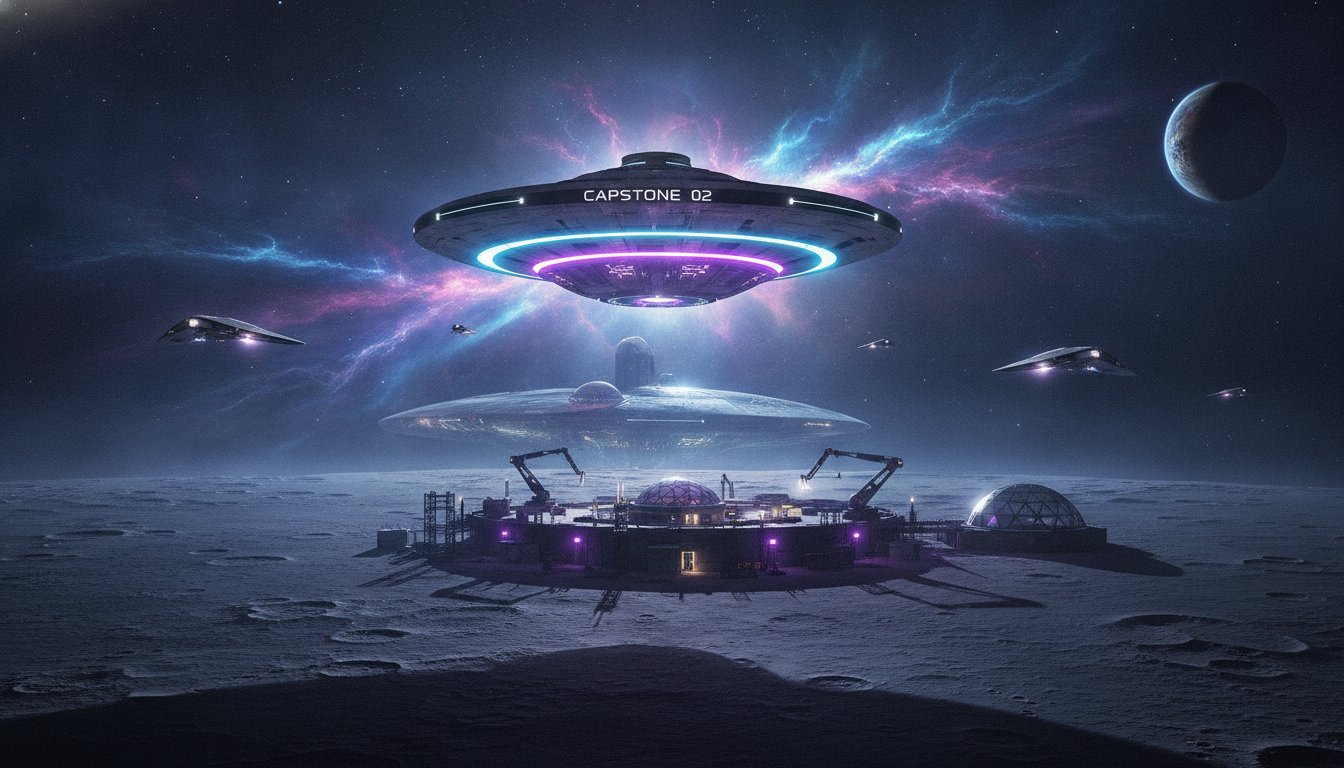
Charting the Cislunar Frontier: Preparing for a Lunar Future
NASA's ambitious vision for a sustained human presence on the Moon, a cornerstone of its Artemis program, hinges on mastering the intricate dynamics of space travel. At the forefront of this endeavor is the upcoming CAPSTONE 02 mission, scheduled for launch in 2027. This crucial mission is designed to push the boundaries of spacecraft maneuverability and navigation within the challenging gravitational environment near the Moon, known as cislunar space.
While the concept of a lunar base might seem distant, foundational missions like CAPSTONE 02 are indispensable. They are not merely scientific experiments; they are vital testbeds for the technologies and operational protocols that will enable astronauts to live, work, and explore the Moon safely and efficiently. By delving into the complexities of what are known as 'three-body orbits,' NASA is systematically preparing for a future where lunar outposts become a reality.
The Gravitational Dance: Unraveling Three-Body Orbits
Cislunar space is a unique cosmic region where the gravitational pulls of both Earth and the Moon exert significant influence. Unlike simpler 'two-body' problems, where a spacecraft orbits a single dominant celestial object, navigating in cislunar space involves a dynamic interplay that creates highly complex orbital paths. These 'three-body orbits' demand sophisticated calculations and precise maneuverability, as even minor gravitational perturbations can have substantial effects on a spacecraft's trajectory and fuel consumption.
Understanding and accurately predicting these gravitational effects is paramount for mission success. It directly impacts the stability of orbits, the efficiency of propulsion systems, and most critically, the safety of crewed missions. CAPSTONE 02 is specifically engineered to test spacecraft behavior in these demanding conditions, gathering invaluable data that cannot be fully replicated in Earth-based simulations.
CAPSTONE 02: A Duo of Navigational Pioneers
Developed by Terran Orbital Systems, Inc., the CAPSTONE 02 mission will deploy two highly maneuverable probes into lunar orbit. These probes will operate in close proximity, flying in 'formation' and alternating between 'chaser' and 'target' roles. This dynamic interaction allows mission operators to observe and analyze real-time gravitational effects and the precise maneuvering required to maintain desired trajectories.
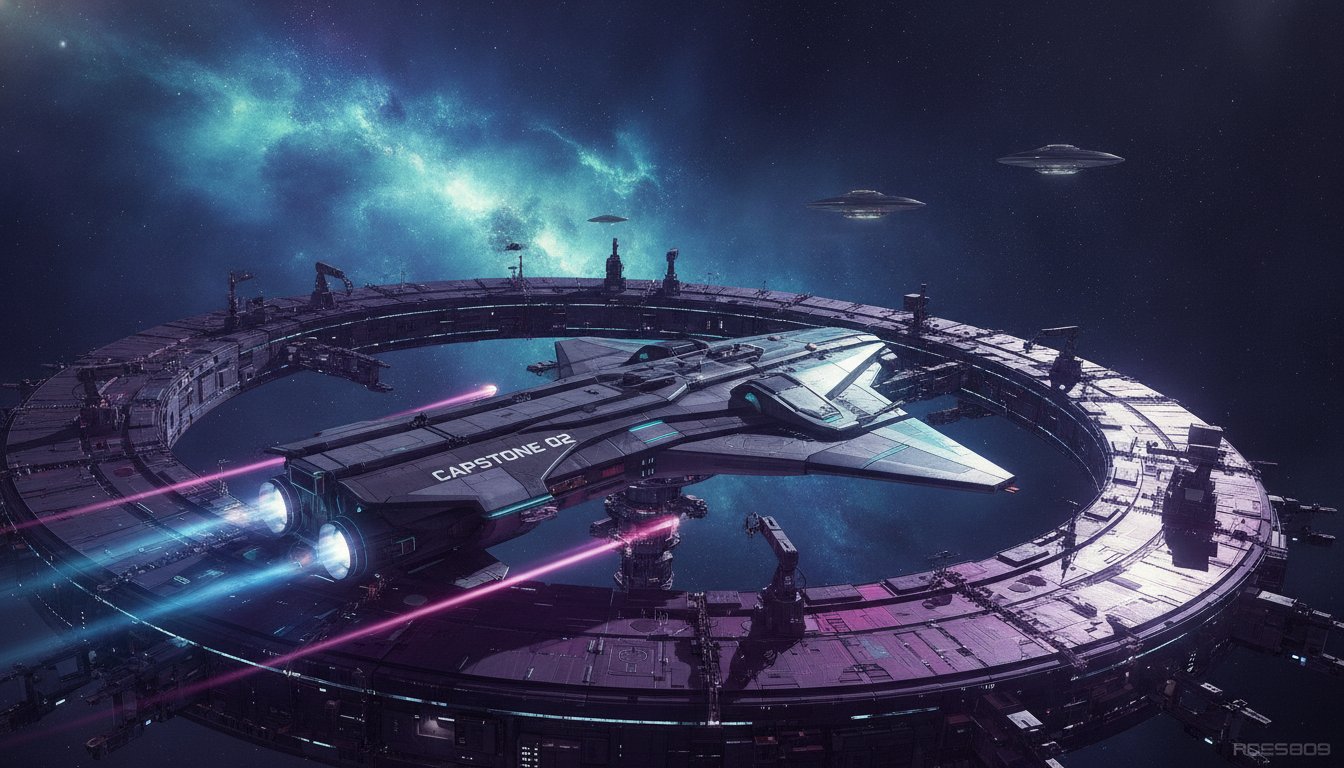
To achieve their objectives, the spacecraft pair will employ a suite of advanced navigation tools. These include celestial navigation, which uses stars and other celestial bodies as reference points; optical sensors for precise relative positioning; and data collected by powerful telescopes on the ground. This multi-faceted approach mirrors the sophisticated techniques NASA plans to use for critical rendezvous operations, such as linking the Orion spacecraft with lunar landers during future Artemis missions.
Paving the Way for Artemis and Lunar Bases
CAPSTONE 02 is more than just an independent mission; it is a direct precursor to the ambitious goals of the Artemis program. As Sean Fuller, NASA's Moon Base CAPSTONE manager, emphasized, "This mission represents an important step in the maturation of cislunar capabilities." The insights gained will directly inform the development and validation of communication and navigation systems essential for transporting crews to the lunar surface from cislunar orbit. These include the intricate procedures for Orion to rendezvous with private lunar landers like Blue Origin's Blue Moon and SpaceX's Starship, as planned for the Artemis III mission.
“Transporting crew to the lunar surface from cislunar orbit depends on knowing how well navigation systems will perform during these operations,” NASA stated. Since these conditions are unique to space, in-orbit testing is non-negotiable for ensuring the reliability and safety of future astronaut expeditions and the long-term viability of a lunar base.
Building on Precedent: The Legacy of CAPSTONE 01
CAPSTONE 02 builds upon the pioneering work of its predecessor, the original CAPSTONE mission (Cislunar Autonomous Positioning System Technology Operations and Navigation Experiment). Launched in 2022 and operating until its conclusion in June 2026, the microwave-oven-sized CAPSTONE spacecraft made history. It was the first to successfully test three-body orbits around the Moon, specifically a near rectilinear halo orbit (NRHO).
The NRHO is a particularly significant orbit due to its relative gravitational stability, benefiting from the nearly equal pull of both Earth's and the Moon's gravity. CAPSTONE 01 provided invaluable data on communication technologies and orbital dynamics within this stable yet complex path, setting a robust foundation for CAPSTONE 02 to delve even deeper into the intricacies of cislunar navigation.
A Stepping Stone to the Stars
Ultimately, CAPSTONE 02 is a critical component in NASA's broader strategy for deep space exploration. By refining our ability to navigate and operate spacecraft effectively in the complex cislunar environment, this mission "lays the foundation for lunar infrastructure and commercial services that support Artemis, Moon Base, and future missions to deep space," as noted by Fuller. It represents humanity's ongoing commitment to pushing the boundaries of discovery, not just for scientific advancement, but for establishing a sustained presence beyond Earth. The knowledge gained will not only ensure a successful return to the Moon but will also empower future endeavors to Mars and beyond, making the vastness of space a more accessible frontier.

![[EN] Watching August's 2026 solar eclipse from the UK? Stay safe with the best solar eclipse glasses](/uploads/-watching-augusts-2026-solar-eclipse-from-the-uk-stay-safe-with-the-best-solar-eclipse-glasses--cover-1785506491290.jpg)
0 Comments
Login to leave a comment.