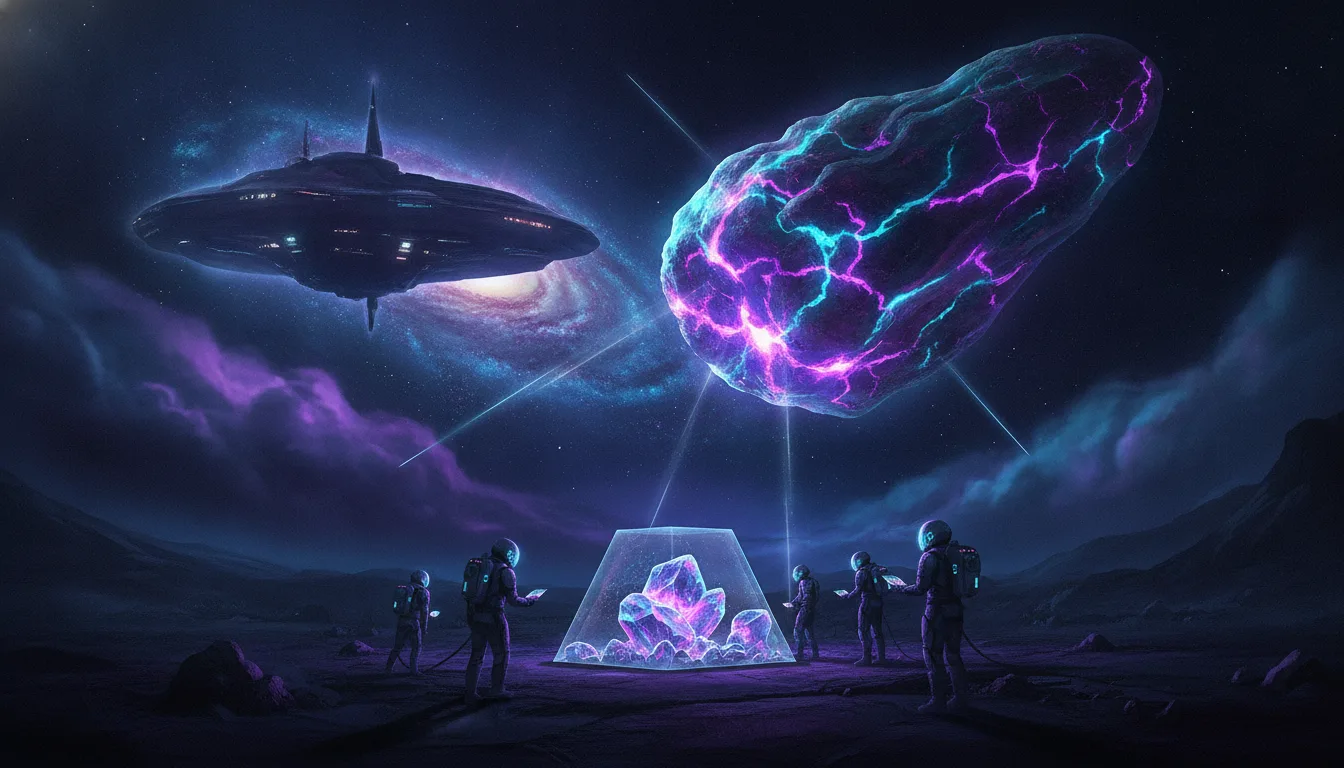
A Cosmic Intrusion: The New Jersey Meteorite
On a summer afternoon two years ago, the skies over the East Coast were dramatically interrupted. A dazzling fireball streaked across the atmosphere, culminating in a sonic boom that reverberated through New York City. The source of this celestial spectacle? A formidable space rock, weighing approximately 110 pounds (50 kilograms), which, after its fiery descent, spectacularly crash-landed through the roof and bedroom ceiling of a house in Hillsborough, New Jersey. This wasn't merely a fascinating incident; it was an extraordinary delivery from the cosmos, potentially carrying profound secrets about the origins of life itself.
An Unprecedented Discovery and Fortuitous Preservation
What truly sets the 'Hillsborough meteorite' apart is not just its dramatic entry, but the incredible fortune that followed. Upon discovering the sulfur-reeking fragments, the alert homeowner displayed remarkable foresight. Recognizing the unusual nature of the find, they donned gloves and meticulously collected the shattered pieces into jars. This seemingly simple act was critical. As Peter Jenniskens, lead author and meteor astronomer from the SETI Institute and NASA’s Ames Research Center, highlighted, "He had the wherewithal to put on gloves and take out jars." For carbonaceous chondrites—the specific type of this meteorite—contamination by oils or moisture from bare hands can severely compromise their scientific integrity. Coupled with a prompt call to the American Meteor Society, these samples remained exceptionally pristine, a rare gift to the scientific community.
Unveiling the Building Blocks of Extraterrestrial Life
Initial analysis, led by co-author Mike Zolensky at NASA's Johnson Space Center, quickly revealed the meteorite's extraordinary nature. It was classified as a CM2 carbonaceous chondrite, a primitive meteorite type formed in the early solar system. However, the Hillsborough meteorite presented a perplexing anomaly: it displayed significant alteration by water, a characteristic typically found in CM1 meteorites, not CM2s. This led to its rare designation as a CM1/2, a hybrid category representing only the second such meteorite ever observed on Earth. Its exceptional preservation, again, makes it the most pristine example of this unique classification.
The Briny Hypothesis: A Cradle for Life?
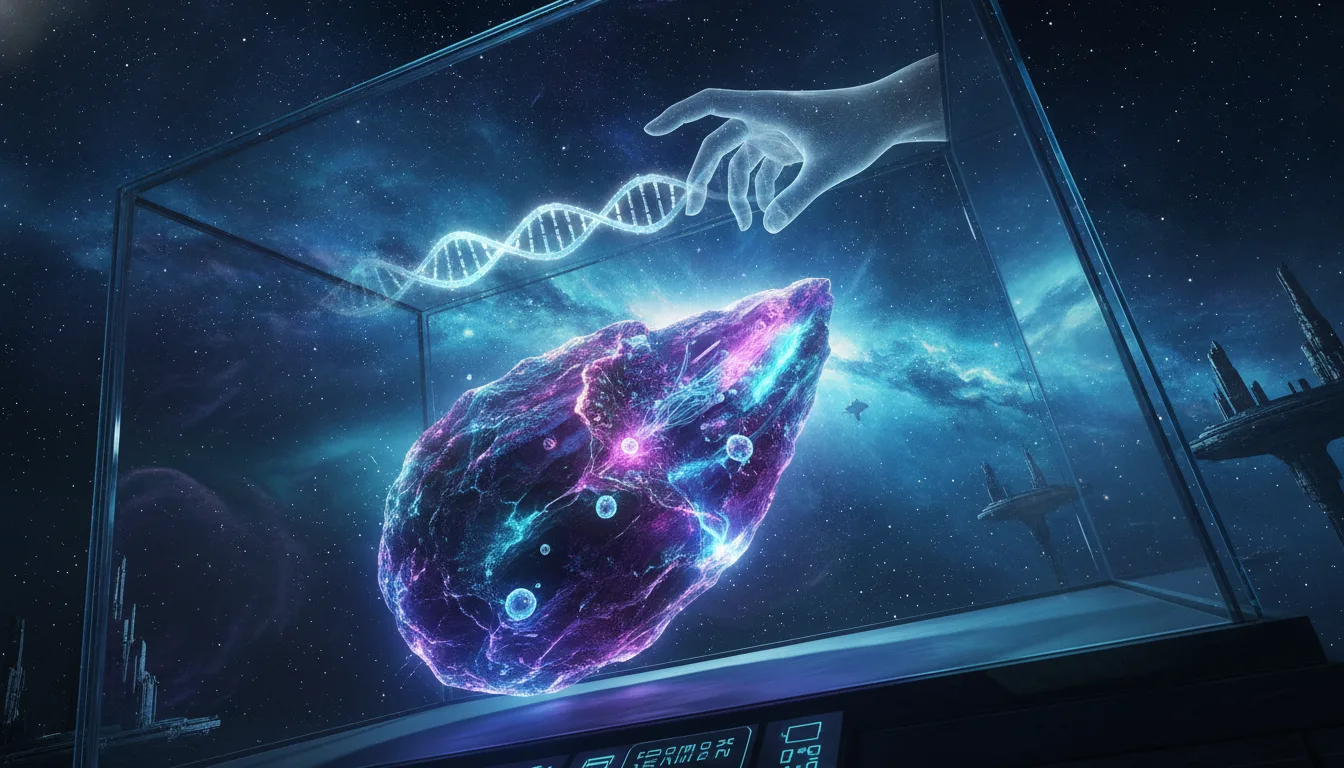
Within the meteorite's fragments, scientists unearthed a treasure trove: organic compounds, including amino acids—the fundamental building blocks of proteins and, by extension, life itself. Crucially, they also found small, salty fragments, indicating that the rock originated from a near-surface region of its parent asteroid where liquid saltwater had evaporated and accumulated. This discovery is monumental.
This 'briny asteroid' scenario aligns with groundbreaking theories on the origins of life. Researchers postulate that such salty, aqueous environments on early asteroids could have provided the perfect crucible for chemical reactions between organic molecules and minerals, catalyzing the complex processes that eventually led to nascent life. Jenniskens aptly captured this potential, suggesting that in studying this meteorite, "you can think of it as smelling the origins of life's atmosphere." The amino acids found in the Hillsborough meteorite appear to have formed precisely through such chemical reactions within this very briny environment on its parent asteroid.
Tracing a Cosmic Journey: From Asteroid Belt to New Jersey
The scientific endeavor didn't stop at analyzing the fallen fragments. Experts, again led by Jenniskens, meticulously reconstructed the meteorite's trajectory. By combining eyewitness accounts, public camera footage (including doorbell and dash cams), and even Doppler weather radar from Newark Airport—which detected a trail of pebbles as the rock broke apart—they pinpointed its speed and direction. This wealth of data allowed them to trace its origin back to the inner asteroid belt. Intriguingly, Jenniskens noted the possibility that this parent asteroid might be one previously observed by NASA's Lucy mission, which is currently exploring the solar system's asteroids, adding another layer to this space mystery.
This incredible discovery underscores the ongoing search for extraterrestrial life and the universe's profound secrets. The Hillsborough meteorite is more than just a remarkable piece of rock; it's a cosmic messenger, offering tangible evidence of the conditions and ingredients that could foster life beyond Earth. For those eager to witness a piece of this extraordinary journey, fragments of the meteorite will be on display at the American Museum of Natural History, a testament to the wonders that fall from our skies. The full findings were detailed in a study published in the prestigious journal Science Advances.
![[EN] The 10 best British sci-fi shows of all time](/uploads/-the-10-best-british-sci-fi-shows-of-all-time--cover-1784143229903.webp)

0 Comments
Login to leave a comment.