The Grand Celestial Alignment: A Week Until Darkness Falls
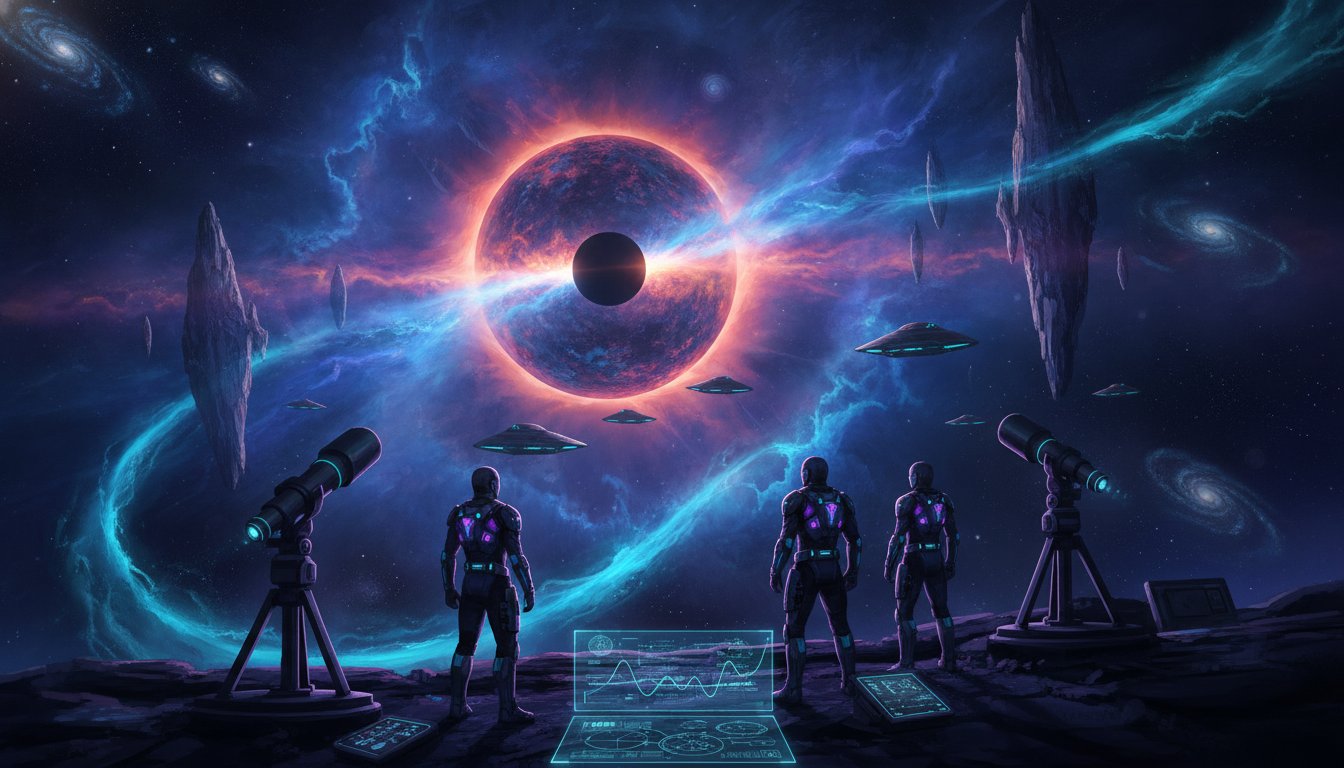
Stargazers and cosmic enthusiasts worldwide are counting down the final week until a truly magnificent event unfolds in our skies: the total solar eclipse of August 12, 2026. This rare astronomical phenomenon promises a breathtaking display as the Moon precisely aligns to obscure the Sun's radiant disk, plunging vast regions into a fleeting twilight. For many, it's not just a scientific observation but a profound moment of connection to the universe's grand design, echoing ancient prophecies and igniting curiosity about the deeper space mysteries that envelop our existence.
Understanding the Cosmic Dance
A solar eclipse occurs during the monthly new moon phase, a precise cosmic ballet where the Moon, in its slightly elliptical orbit, passes directly between the Sun and Earth. This alignment casts the Moon's vast shadow, known as the umbra, across a swathe of our planet's surface. Those within this narrow path of totality will witness the Sun's brilliant corona, usually hidden, emerge in a shimmering spectacle, a sight that often evokes awe and wonder, perhaps even prompting contemplation on the existence of extraterrestrial races observing such events from afar.
The Path of Totality: A Journey Across Continents
On August 12, 2026, an estimated 15.2 million individuals across Greenland, Iceland, Portugal, Russia, and Spain will find themselves in the privileged path of totality. According to Time and Date, the lunar disk will completely hide the Sun's face starting at 12:58 p.m. EDT (1658 GMT), creating an unforgettable experience. Imagine the sudden drop in temperature, the eerie quiet, and the celestial 'diamond ring' effect as the last sliver of sunlight vanishes, revealing the Sun's ethereal outer atmosphere. This is a journey through shadow that few are fortunate enough to witness.
Beyond the Umbra: The Widespread Partial Eclipse
While the path of totality is narrow, nearly 980 million people—approximately 12% of Earth's human population—will still bear witness to a significant partial eclipse. Viewers across the U.K. and several other European countries will experience an impressive partial occultation, with around 90% of the Sun's surface veiled by the Moon as it dips low on the western horizon. Even parts of the northeastern U.S., including states like New York, Maine, and Pennsylvania, will observe the Moon taking a noticeable 'bite' out of the Sun, reminding us of the interconnectedness of all cosmic phenomena.
Safeguarding Your Vision: Essential Viewing Guidelines
Such a breathtaking event demands caution. Staring directly at the Sun during any phase of a partial eclipse can lead to permanent vision loss. It is paramount to use ISO 12312-2 certified solar viewing gear. Products like the Celestron EclipSmart Power Viewers, which offer 2x magnification and certified lenses, are essential. Space.com emphasizes safety, providing comprehensive guides to safely viewing a solar eclipse and recommending the best solar viewing gear for the 2026 event. Prepare now to ensure a safe and memorable experience.
A Golden Age of Eclipses and Cosmic Contemplation
This August's umbral show is merely the prelude to what experts are calling a "Golden Age" of solar eclipses. Between 2026 and 2028, Earth will experience three total eclipses and three annular "ring of fire" eclipses, offering an unprecedented series of celestial spectacles. Such frequent and profound alignments not only highlight the precision of cosmic mechanics but also invite us to ponder the greater unknowns. It's during these moments of cosmic grandeur that questions about UFO sightings, ancient celestial visitors, and humanity's place within a potentially vast Galactic Federation seem to resonate more deeply.
Reporting from the Edge of Shadow
The scientific community and seasoned reporters are already mobilizing. Skywatching Editor Daisy Dobrijevic is embarking on an eclipse expedition to Greenland with HX Expeditions, while Skywatching Writer Anthony Wood is heading to Spain to experience the eclipse alongside NASA's DEB initiative and a dedicated team of citizen scientists. Their efforts will bring us real-time news and updates, promising an immersive experience even for those far from the path of totality.
Experience It Anywhere: Virtual Observatories
For those not in the direct path or unable to travel, there's no need to worry. Details of livestreams will be released closer to the date, allowing viewers to watch each stage of the total solar eclipse unfold from the comfort of their homes. Whether directly observing or virtually participating, the August 12, 2026, eclipse is a global invitation to look skyward and marvel at the incredible dynamics of our solar system, a moment that transcends geographical boundaries and unites us in shared cosmic wonder.

0 Comments
Login to leave a comment.