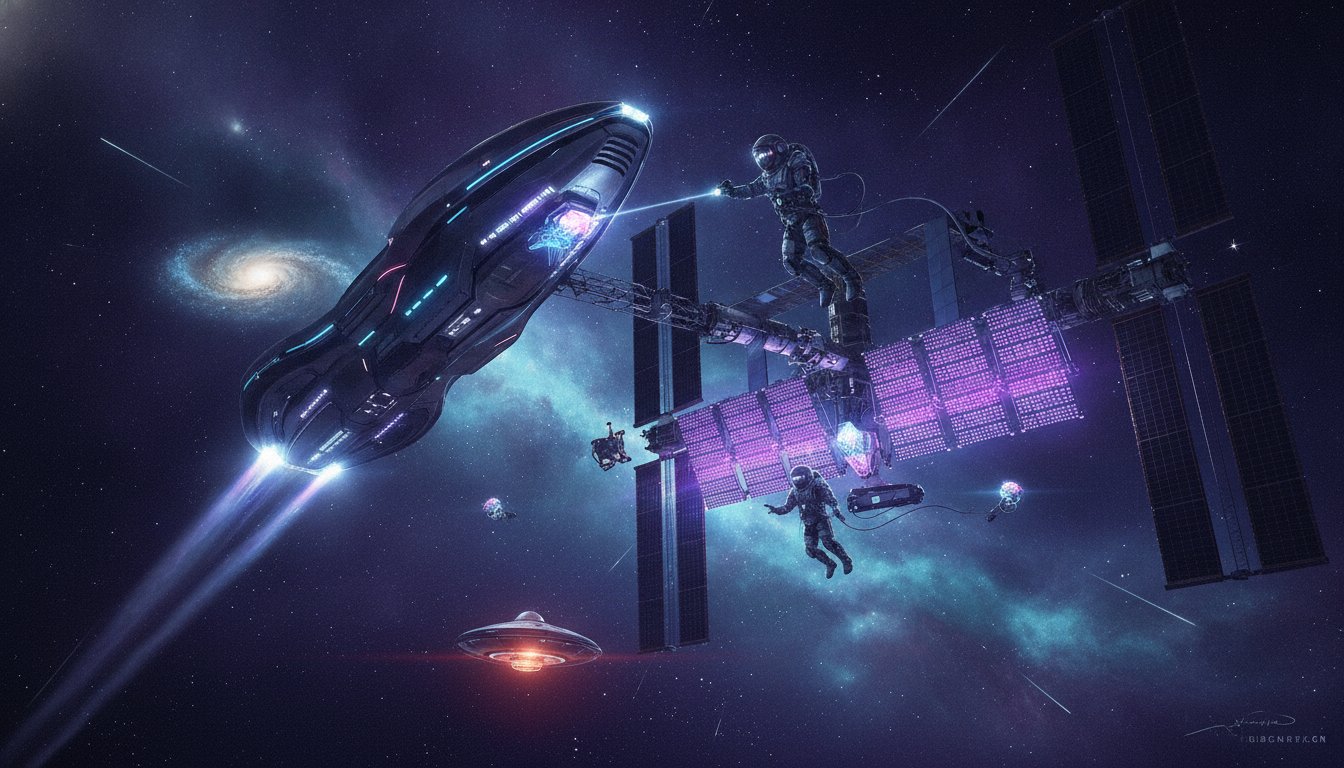
A Daring Cosmic Ballet: Powering Humanity's Orbital Outpost
In a testament to human ingenuity and perseverance, NASA astronauts Jessica Meir and Anil Menon successfully executed a critical 6.5-hour spacewalk (EVA) on Thursday, August 6, 2026. Their mission: to meticulously install the seventh and final set of mounting hardware essential for the future addition of new, advanced solar arrays on the International Space Station (ISS). This intricate operation represents a pivotal step in enhancing the station's capabilities, ensuring its longevity as a beacon for space exploration and a platform for unlocking new space mysteries.
From the moment Meir and Menon switched their spacesuits to internal battery power at 8:33 a.m. EDT (1233 GMT), the orbital ballet began. The spacewalk, designated as the 96th U.S. EVA and the 281st overall in support of the ISS, was focused on preparing the 3B power channel for an ISS Roll-Out Solar Array (iROSA). These iROSAs are not replacements but powerful augmentations, designed to work in tandem with the station's original arrays, which have begun to show degraded power output after exceeding their 15-year design life.
Engineering Marvels in the Void
The task at hand was akin to assembling a giant, complex erector set in the vacuum of space. Meir and Menon skillfully worked to assemble and bolt together triangular brackets on the 3B power channel, located on the far right, or starboard (S6) segment, of the station's backbone truss. Anil Menon, embarking on his first career spacewalk, was strategically positioned on an articulating portable foot restraint (APFR) atop a worksite interface (WIFEX), providing a stable angle crucial for precision work. Jessica Meir, a seasoned spacewalker with this being her sixth, guided the intricate process.
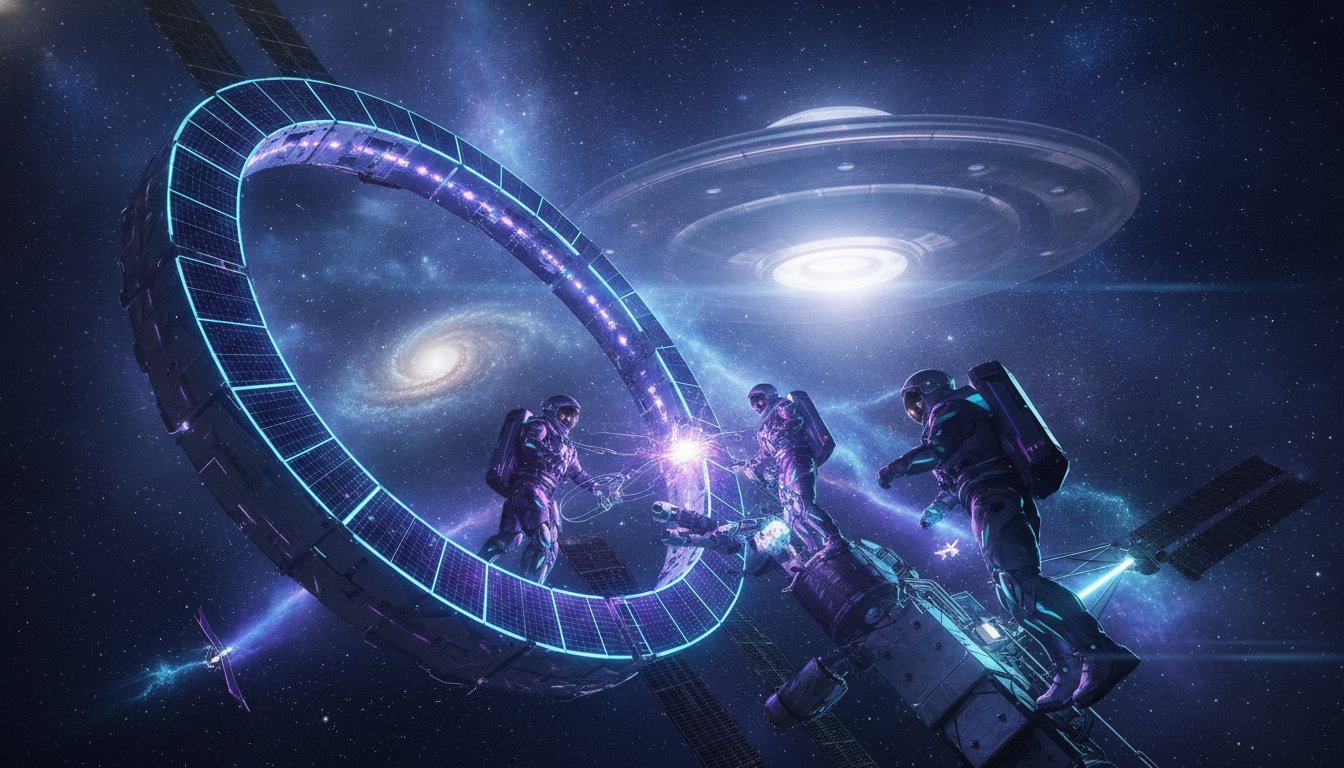
Once the modification kit structure was securely built and affixed to the 3B mast canister, the duo proceeded with routing the crucial cabling. These wires will channel the vital electricity from the future iROSA into the 3B power channel, significantly boosting the station's energy supply. To safeguard these critical new components from the unforgiving environment of low Earth orbit, particularly from potential micrometeoroid strikes, the struts were meticulously covered with multi-layer insulation. With six iROSA assemblies already deployed since 2021 by previous spacewalks, only two more await delivery to the station later this year, including the one for the 2A power channel on the port side.
A Glimpse Beyond: The Moon, Mars, and Future Cosmic Journeys
Amidst the demanding work, the vastness of space offered moments of profound reflection. Taking a brief respite, Meir pointed out the Moon to Menon, sparking a conversation about humanity's next giant leaps. "I can see a future moon base there," Menon remarked, a sentiment echoed by Meir. Their exchange underscored the tangible connection between the meticulous work on the ISS and the ambitious goals of the Artemis program, aiming to return humans to the lunar surface.
As the spacewalk neared its conclusion, Meir's thoughts turned to Mars. She commemorated the August 2012 landing of NASA's Curiosity rover, highlighting its success in confirming Mars' past habitability. "One day, humans will visit Curiosity, propelled by the groundbreaking science, technology demonstrations and operations conducted here on the International Space Station for almost 26 years now," she stated. This powerful message linked the immediate mission of upgrading the ISS power system to the broader cosmic journey of sustained human presence in low Earth orbit and eventual exploration of the Red Planet. This vital spacewalk, concluding after 6 hours and 27 minutes, not only expanded the ISS power system by an estimated 20% to 30% but also served as a profound reminder of our species' relentless drive to explore the universe and uncover its many space mysteries.
Looking Ahead: Continuous Endeavor in Orbit
This spacewalk marks the beginning of an active period for the Expedition 75 crew. Two more U.S. EVAs are slated for this month: EVA 97 on August 13 will focus on replacing a space-to-ground antenna, and EVA 98 on August 25 will involve connecting power channel cables, data relay systems, and replacing a navigational aid used for spacecraft docking, all while continuing preparations for the station's future deorbit. Each step, each bolt tightened, and each cable routed is a testament to the ongoing human endeavor to sustain our presence in space and prepare for the next chapter in humanity's cosmic odyssey.
0 Comments
Login to leave a comment.