The presence of Unidentified Flying Objects (UFOs) and their astonishing capabilities challenges the very foundations of human science. Decades of diligent research by figures like the late nuclear physicist Stanton T. Friedman, whose work is meticulously preserved in The Black Vault's Stanton Friedman Collection, suggest that some of these enigmatic craft originate from distant solar systems. This premise immediately raises two monumental questions: How can a spacecraft traverse light-years of cosmic distance in a reasonable timeframe? And once within our atmosphere, how do these vessels perform feats—such as instantaneous stops, extreme velocities, silent operation, and peculiar glows—that utterly defy conventional aeronautics?
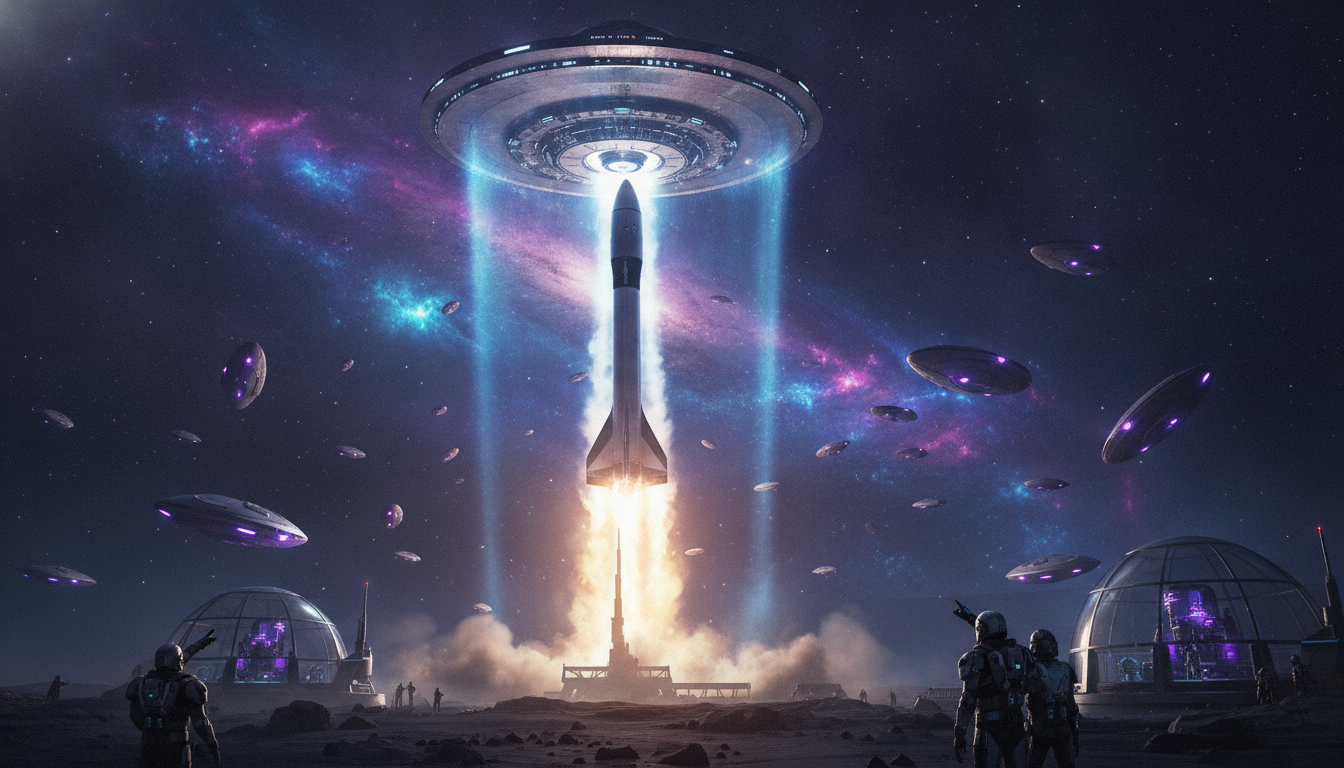
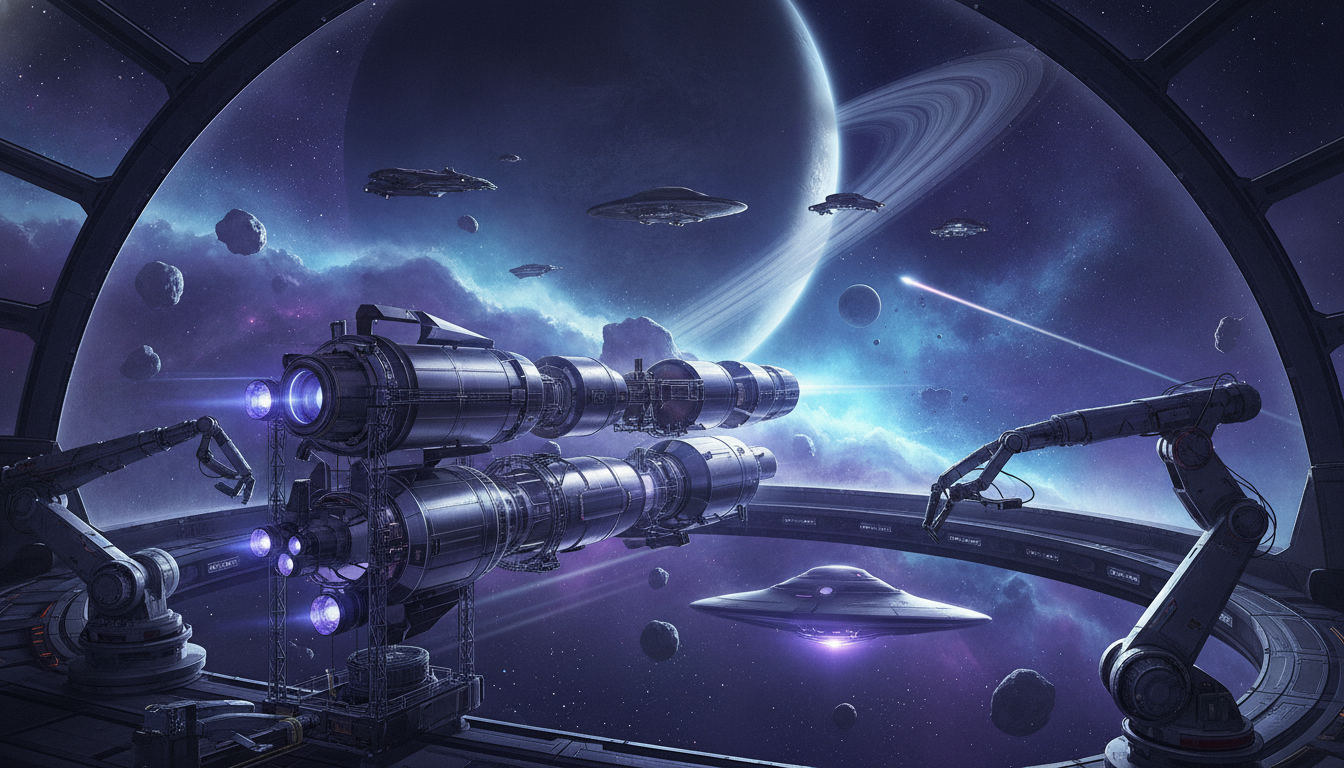
Friedman's analysis postulates a division of labor in advanced space travel: massive, cigar-shaped "mother ships" for interstellar transit, and smaller, often disc-shaped "Earth Excursion Modules" (EEMs) for local operations. This mirrors our own naval fleets, where an aircraft carrier (the mother ship) facilitates the deployment of specialized, high-performance aircraft (EEMs). While mother ships remain largely within the depths of space, EEMs are frequently reported in 'UFO sightings' closer to Earth, showcasing their incredible maneuverability.
The Interstellar Conundrum: Bridging Vast Distances
Interstellar travel fundamentally differs from interplanetary missions. The sheer scale—light-years versus light-minutes—renders our chemical rockets obsolete for such vast 'space mysteries'. The critical factor becomes sustained, high acceleration. Friedman notes that a continuous acceleration of just one G (an increase of 21.9 mph per second) could propel a craft to nearly two million mph within a single day. For perspective, trained humans can withstand up to 30 Gs for short durations, suggesting that 'extraterrestrial races' might be either extremely resilient or shielded by highly advanced technologies, enabling sustained high acceleration critical for galactic voyages.
Unveiling Advanced Propulsion: From Atmosphere to Deep Space
The extraordinary behavior attributed to UFOs demands propulsion systems far beyond our current engineering. Friedman's research points to two primary categories for these phenomena:
Magnetoaerodynamic (MAD) Systems for Atmospheric Agility
For the local operations of EEMs, magnetoaerodynamic (MAD) systems offer a compelling explanation. By creating and manipulating electric and magnetic fields, these systems generate a Lorentz force against ionized, electrically conductive air. This interaction provides thrust without visible engines or noisy exhaust.
- Explaining UFO Characteristics: A MAD system intrinsically supports observed UFO traits: silent operation, symmetric design, high maneuverability, and the oft-reported mysterious glow (from air ionization). Such systems could electromagnetically manage lift, drag, heating, and sonic boom, facilitating the abrupt directional changes and sudden stops that baffle eyewitnesses during 'UFO sightings'. Classified research on similar principles (e.g., ballistic missile re-entry) underscores the scientific viability of such concepts.
Nuclear Propulsion: The Gateway to the Stars
For crossing the interstellar void, Friedman identifies nuclear propulsion as the logical successor to chemical rockets.
Fission Rockets: Early human attempts, like the NERVA program, successfully ground-tested fission rockets. These harness immense energy from uranium-235 fission, millions of times more efficient than chemical fuels. Despite challenges, tests like the NRX A-6 and Phoebus-2B in the late 1960s demonstrated billions of watts from compact reactors, proving the potential for high-velocity exhaust by heating hydrogen.
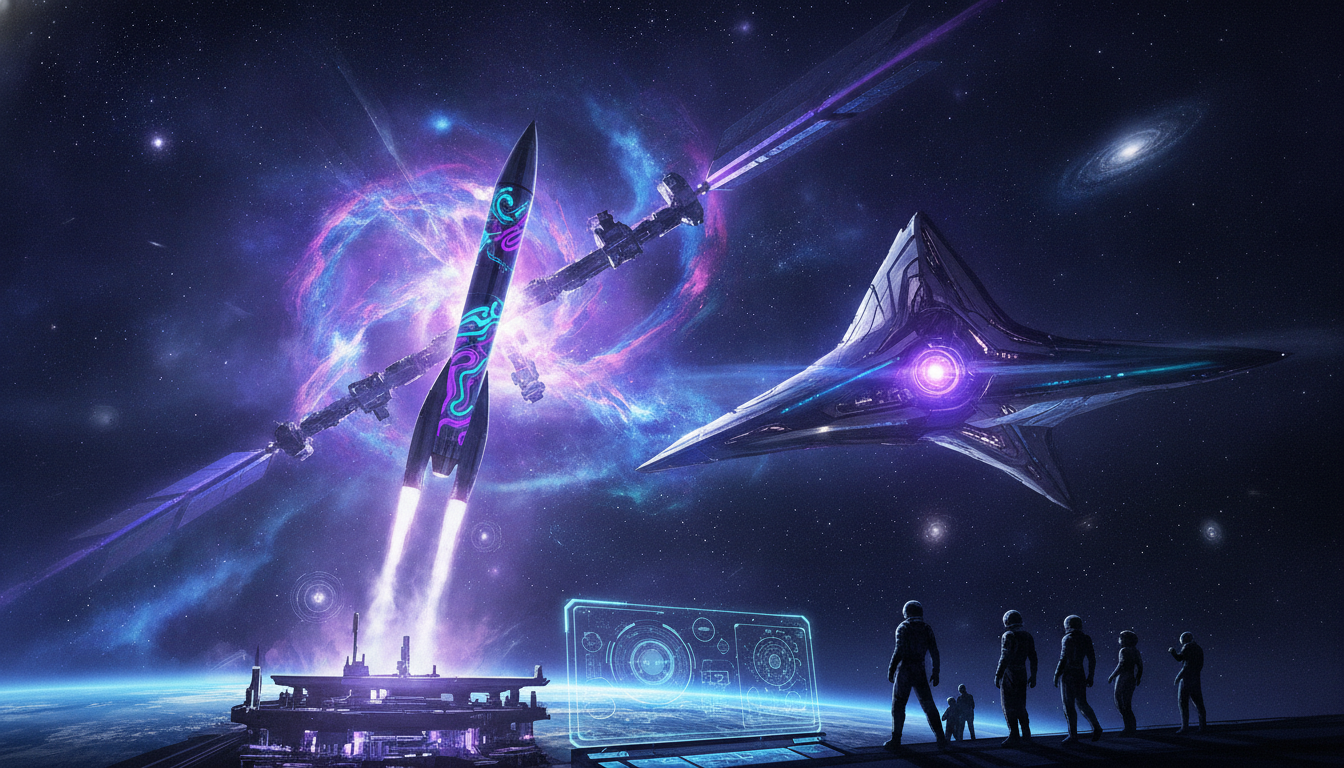
Fusion Propulsion: The Cosmic Standard: The pinnacle of interstellar travel would likely be fusion propulsion. This process, powering stars, combines light nuclei (e.g., hydrogen and helium isotopes) to release vast energy. A fusion drive could efficiently expel highly energetic charged particles for thrust, directed by electromagnetic fields. Hydrogen and helium, the universe's most abundant elements, provide a limitless fuel source. Studies suggest advanced fusion systems could enable round trips to nearby stars within a human lifespan, hinting at how an advanced 'Galactic Federation' might systematically explore the cosmos.
Beyond Conventional Science: The Unseen Frontiers
Friedman also touches upon more speculative, yet plausible, avenues:
- Laser Propulsion: Leveraging powerful, off-board lasers to propel craft.
- Quasar-like Energy Sources: Tapping into energy processes far more potent than stellar fusion.
- Subnuclear Forces: Exploiting even greater energy density within the atomic nucleus.
- Space-Time Bending: Manipulating space-time itself to create shortcuts, bypassing linear travel—a concept foundational to warp drives and traversing 'space mysteries' instantaneously. This underscores that technological progress is often non-linear and unpredictable.
Time Dilation and Galactic Reach
Einstein's theory of relativity offers a profound mechanism for interstellar journeys: time dilation. As a spacecraft approaches the speed of light, time slows down for its occupants relative to stationary observers. For example, a trip spanning 37 light-years (e.g., to Zeta 1 or 2 Reticuli) at 99.9% the speed of light would subject the crew to only 20 months of perceived travel time; at 99.99% c, this drops to six months. Even a journey to the Andromeda galaxy, two million light-years away, could theoretically be completed within 60 crew years if sustained one-G acceleration were maintained.
This implies that for advanced civilizations, interstellar travel could be a systematic, well-established practice. Given that many stars are billions of years older than our sun, it is probable that 'extraterrestrial races' have been engaging in such voyages for eons, potentially leading to widespread galactic colonization, as some academic papers suggest. The relative proximity of certain star systems, like Zeta 1 and 2 Reticuli (less than three light-weeks apart), could have facilitated the earlier development of interstellar travel in such regions.
Conclusion
The study of UFO propulsion, championed by visionaries like Stanton Friedman, compels us to rethink our cosmic perspective. The apparent capabilities of these mysterious craft suggest a profound mastery of physics, pointing towards solutions from ingenious magnetoaerodynamics for atmospheric flight to the awe-inspiring power of nuclear fusion for traversing the vast emptiness between stars. These insights offer not just potential answers to 'space mysteries' but also a tantalizing glimpse into the technological prowess of 'extraterrestrial races' and the potential for future 'UFO disclosures' that could redefine humanity's place in the cosmos.