The Enduring Geopolitical Chessboard: The Strait of Hormuz Under Scrutiny
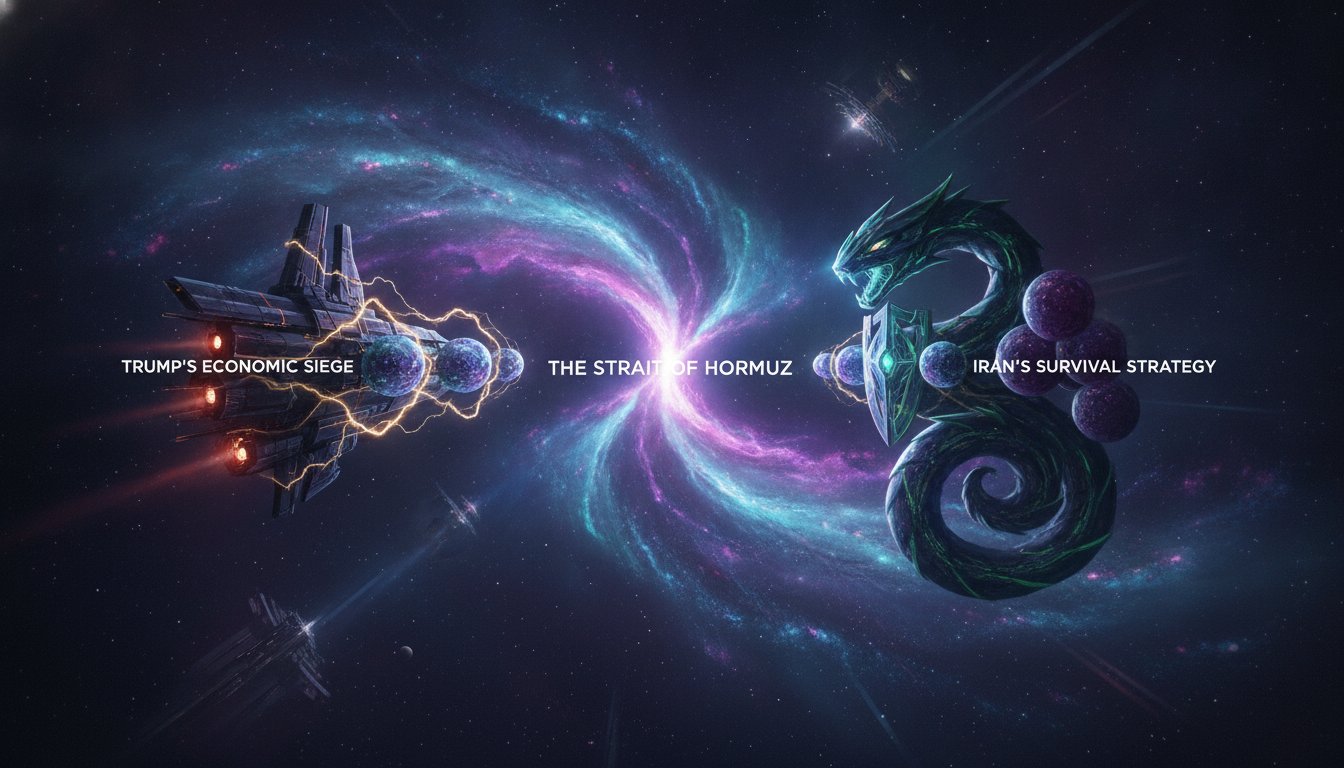
The Strait of Hormuz, a narrow yet globally indispensable maritime choke point, once again finds itself at the heart of an intense geopolitical standoff between the United States and Iran. Former President Donald Trump recently reiterated a familiar assertion on Truth Social, claiming "total control" over the strategic waterway and expressing his intent for the US to "keep it." This declaration serves not only as a political refrain but also as a crucial confirmation of Washington's primary strategy: an economic siege designed to compel Tehran. However, as the US doubles down on its financial pressure, Iran's military leadership remains defiant, proclaiming "victory is on our side" and adapting to a protracted conflict.
Trump's Economic Siege: A Risky Bet on Iranian Capitulation
Washington's pivot away from direct military confrontation, particularly following Operation Epic Fury, has solidified its reliance on economic warfare. President Trump's strategy hinges on the belief that severe sanctions and a naval blockade will eventually force Tehran to yield to US demands. This approach, however, rests on a precarious assumption: that Iran's economic system will crack under pressure before Washington faces its own political or strategic fatigue.
The Islamic Republic has, according to reports from The Wall Street Journal, transitioned into a "survival economy." This isn't a new phenomenon for Iran, a nation long accustomed to international sanctions. Analysts observe Tehran implementing time-tested measures: rationing scarce goods, restricting access to foreign currency, drastically cutting investment, and shifting the economic burden onto its households. Concurrently, the state meticulously preserves strategic imports and essential governmental machinery. While this strategy is predicted to deepen economic malaise, poverty, and dysfunction for the populace, it also paradoxically affords Iran's leaders greater leverage and room to delay or outright resist negotiations with the U.S. Mediators have consistently cautioned their US counterparts that Iran's historical resilience under sanctions makes any bet on an impending economic collapse unlikely to yield desired results.

Iran's Enduring Resilience and Strategic Counter-Pressures
Despite the formidable economic pressure, Iran's leadership projects an image of unwavering resolve. The declaration of "victory" by Iranian military leaders underscores their confidence in outlasting Washington's campaign. Their deep experience in navigating sanctions regimes has enabled the development of a sophisticated 'survival economy,' demonstrating an impressive capacity for internal adaptation. This resilience fundamentally challenges the US assumption that economic hardship will automatically translate into political capitulation.
Tehran's conditions for de-escalation are clear and unyielding: the Strait of Hormuz, a critical conduit for global oil supplies, will remain closed until Washington accepts all of Iran's terms. This stance transforms the strait into a powerful bargaining chip, putting significant pressure on global energy markets and highlighting the international stakes involved.
Stalled Diplomacy and the Shadow of Escalation
The broader peace process remains in a deep stalemate, with diplomatic efforts repeatedly hitting dead ends. Reports from various mediators, including Pakistan, paint a grim picture: "absolutely no progress" has been made. The previously discussed 60-day Memorandum of Understanding (MoU) for negotiations appears effectively defunct, with Iran having already declared it null and void. This lack of a viable diplomatic track exacerbates the already tense situation.
Overnight developments further illustrate the volatility of the region. President Trump openly expressed his distrust of Iran, while Pakistan's Foreign Ministry continued its direct and indirect diplomatic channels, striving to bring both sides to the negotiating table in Islamabad, maintaining a fragile optimism despite escalations. However, statements from Iranian officials, such as the Army's intent to maintain control of Hormuz as a key source of geopolitical power, and chilling threats from the IRGC regarding global energy and internet infrastructure in response to any further threats against Iran, underscore the perilous trajectory. Regional incidents, including reported Israeli airstrikes in southern Lebanon and ongoing issues in Yemen, further complicate the intricate web of Middle East tensions, ensuring that the stalemate in the Strait of Hormuz remains a critical flashpoint with far-reaching global implications. The core question endures: who will bend first, if at all, in this high-stakes game of economic attrition and strategic resolve?




0 Comments
Login to leave a comment.