The Quiet Power of Yantras: Sacred Geometry for Inner Stillness
In a world brimming with constant stimulation, the pursuit of inner calm often leads to meditation. Yet, even during deep practice, a wandering mind can be a persistent challenge. This is precisely where the profound potential of Yantras emerges, offering a tangible anchor for attention and a gateway to deep stillness.
Smita Nanda's journey into Hindu Yantras began as an explorer, not a practitioner. Inspired by the guidance of Indian spiritual guru Sadhguru Jaggi Vasudev of the Isha Foundation, Nanda delved into deeper aspects of inner work. Her research consistently revealed Yantras—intricate geometric patterns used as visual aids for meditation. The consistent reports from practitioners of a simple yet profound effect—a quieting, a settling, a sense of "coming home" to oneself—compelled her to experience this sacred geometry firsthand.
What is a Yantra? Unpacking Ancient Symbolism
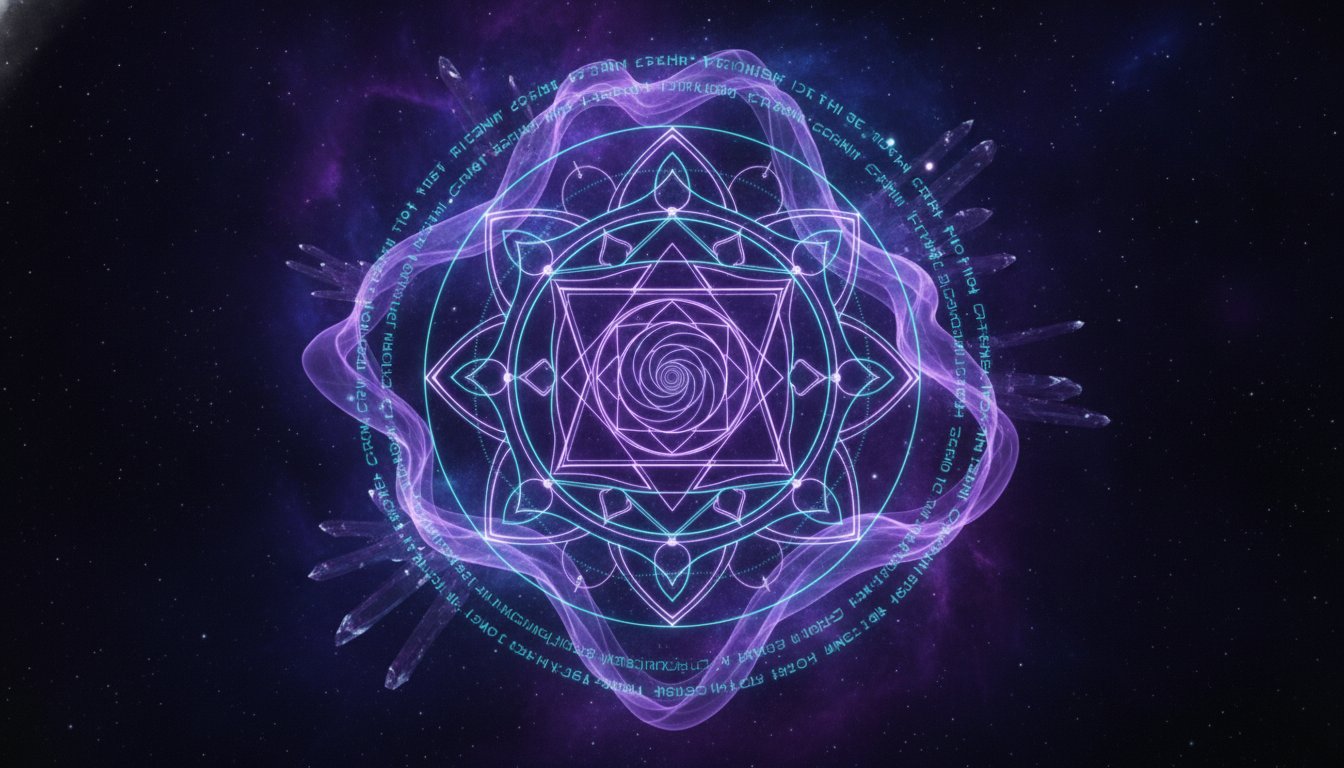
A Yantra, seemingly a decorative piece, holds profound mystical meaning and is imbued with cosmic energy. Crafted from paper, metal, wood, or even drawn on leaves, its essence lies in its meticulously structured patterns. At its center is the bindu, a dot signifying the primal source of all creation. Outwardly, circles and lotus petals symbolize universal expansion. Triangles, pointing up and down, represent the dynamic interplay of masculine and feminine energies, reflecting the universe's inherent duality.
Derived from the Sanskrit roots yam (holding or containing) and tra (instrument or tool), a Yantra is understood as both a vessel containing cosmic energy and a sophisticated tool to support achieving one's highest spiritual goals and inner peace.
Universal Resonance: Sacred Geometry Across Cultures
While central to Indian spiritual traditions, the spiritual significance of sacred geometry extends globally. The precise forms of the Egyptian pyramids symbolize the integration of self and soul. Intricate patterns adorning Islamic mosques are believed to purify the mind and spirit. Similarly, in Tibetan Buddhism, mandalas—complex geometric artworks—illustrate unity, interconnectedness, and life's impermanence. Across centuries and diverse cultures, the quiet pull of these structured patterns endures, hinting at a shared, ancient wisdom.

The Practice: How Yantras Cultivate Inner Stillness
The human mind is naturally drawn to systematically arranged, complete patterns. Symmetry offers a quiet ease, a sense of order that gently steadies attention and promotes mindfulness. To experience the benefits of Yantras, a disciplined process is recommended.
Yantras are not static images; they are living entities activated through intention. Begin by choosing a clean, quiet spot. Position the Yantra on a low altar and sit comfortably, close enough to appreciate its details. Allow your eyes to gently rest on the central bindu—this focused looking is known as trataka. Let the Yantra anchor your attention.
Each Yantra has a specific mantra. For instance, while meditating on the Bhuvaneshwari Yantra, you might chant, "Om Hreem Shreem Kleem Bhuvaneshwari Namah." Your mind will wander, as it always does. But the Yantra, combined with the mantra, will gently guide your awareness back. With consistent meditation techniques, the Yantra transforms from a picture into a doorway, revealing the profound stillness that has always resided within.
The Healing Aspect: Emotional Stability and Chakra Alignment
Beyond meditation, these geometric patterns serve as powerful spiritual tools for emotional stability. Each Yantra carries a specific intention. The renowned Sri Yantra is associated with abundance, inner connection, and balance, attracting positive energy. Yantras like Vighna Vinashak (Lord Ganesha, destroyer of obstacles) are used to overcome inner blockages such as fear and resistance.
At a deeper energetic level, each chakra is linked with a specific Yantra. Meditating on a Yantra related to a particular chakra facilitates the flow of energy through that center, resulting in balance, clarity, and peace. Most practitioners report not dramatic change, but a steadying of emotions, a quieting of the mind, and a return to oneself. In an age of anxiety and lack of focus, this cultivation of inner stillness offers profound healing.
Leading Inward: A Universal Invitation
While Yantras' origins are deeply rooted in a specific cultural context, their essence transcends these boundaries. At their core, Yantras invite attention, stillness, inner alignment, and access to ancient wisdom. Even as their symbolic meanings remain richly traditional, the experiences they facilitate are universally accessible. The static lines of a Yantra, in their intricate dance, seem to lead gently inward. It is in this journey towards the self, facilitated by these powerful geometric patterns, that the true meaning of Yantras unfolds—not merely in their design, but in the quiet, sacred space they help us reclaim.

0 Comments
Login to leave a comment.