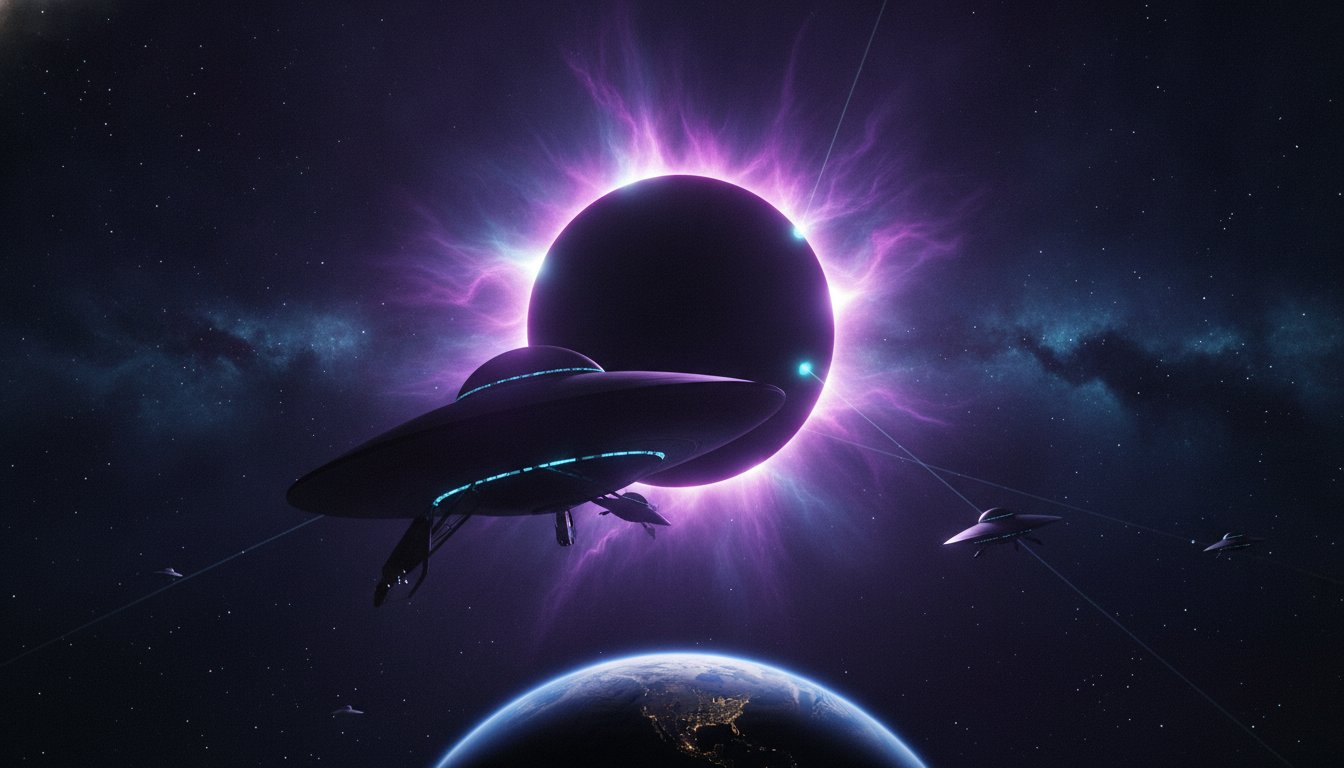
The Unprecedented Spectacle of the 2026 Total Solar Eclipse: A Glimpse into the Sun's Dynamic Corona
On August 12, 2026, sky-watchers across Greenland, Iceland, Spain, and the Balearic Islands will bear witness to a celestial event of unparalleled beauty and scientific significance: a total solar eclipse. While the moon's silhouette against the sun is a familiar sight, the brief moments of totality reveal something truly unique and ephemeral—the sun's majestic corona. This outer atmosphere of our star, a breathtaking crown of white tendrils and delicate streamers, is a dynamic entity, constantly sculpted by the sun's powerful and ever-changing magnetic field. As such, the corona unveiled during the 2026 eclipse will be a sight no human eye has ever beheld before, nor will it ever be seen again in quite the same configuration.
The Enigmatic Solar Corona: A Hidden World Revealed
Under normal circumstances, the sun's brilliant photosphere—its visible surface—completely overwhelms the subtle glow of the corona, rendering it invisible from Earth. It's only during a total solar eclipse, when the moon precisely blocks out the sun's disk, that this ethereal atmosphere bursts into view. Extending millions of miles into space, the corona often appears far larger and more complex than observers anticipate, showcasing intricate details and an impression of depth that even the most advanced cameras struggle to capture.
Why Every Corona is Unique
The solar corona is not a static feature. It's composed of incredibly hot plasma—ionized gas—that is trapped and molded by the sun's powerful magnetic field. Given that the sun's magnetic field is in a continuous state of flux, the corona's structure transforms with it. As solar physicist Ryan French of the Laboratory for Atmospheric and Space Physics (LASP) explains, the sun undergoes an 11-year cycle of activity, fluctuating between a 'solar minimum' (few sunspots, less activity) and a 'solar maximum' (numerous sunspots, high activity).
During solar minimum, the corona often appears more uniform and symmetrical, characterized by long, wing-like streamers. Conversely, at solar maximum, the presence of many sunspots—which act as magnetic anchors—creates a far more complex, almost star-shaped corona with spikes and spires extending in various directions.
Solar Cycle 25 and the 2026 Eclipse: A Unique Middle Ground
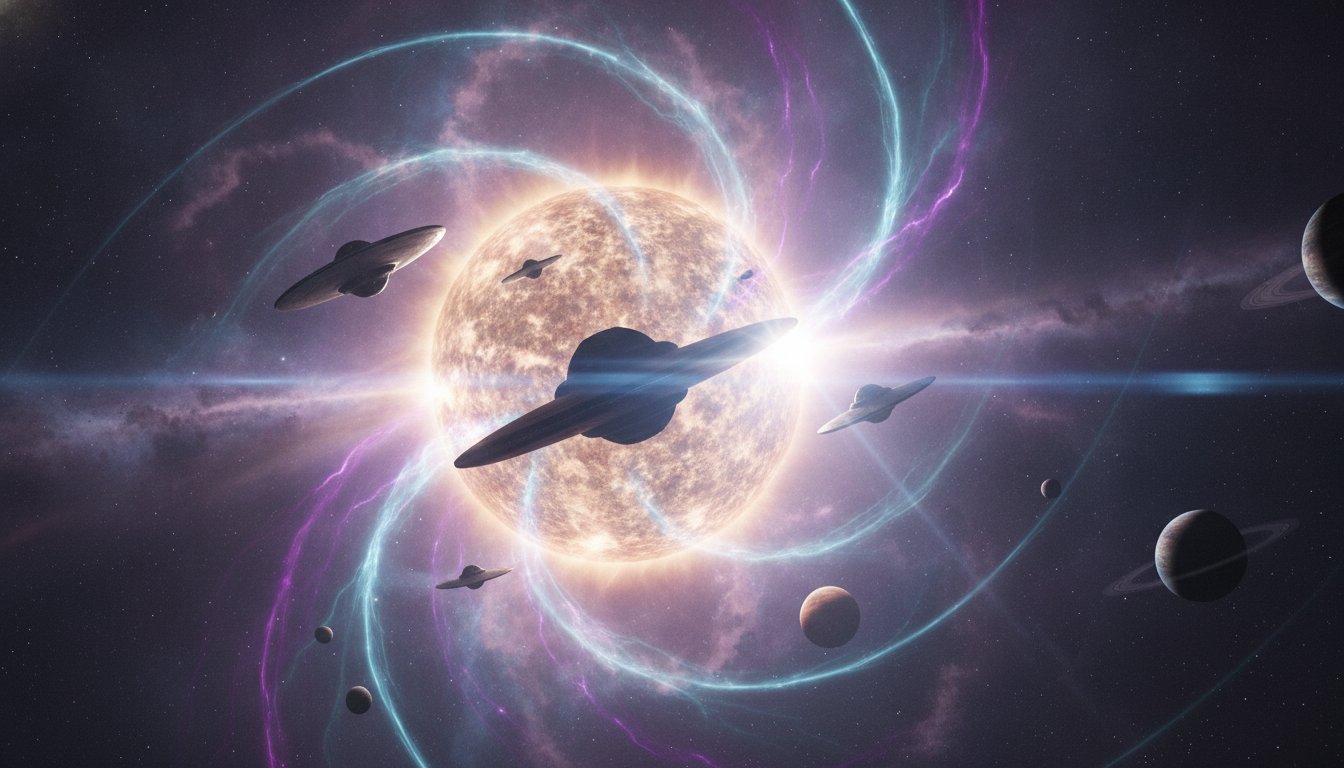
The total solar eclipse of August 12, 2026, is poised to offer a particularly fascinating display because it occurs during a declining phase of Solar Cycle 25. While Solar Cycle 25 peaked in October 2024, solar activity doesn't simply cease. It gradually diminishes, meaning the sun in August 2026 will still be significantly more active than during recent solar minimum eclipses (like 2017, 2019, or 2020), but less frenetic than the peak activity seen in 2024. Current predictions suggest a monthly sunspot number around 102 for August 2026, a notable drop from 2024's 144, but still indicative of an active sun.
This position provides a unique 'middle category' corona—neither the flattened, symmetrical appearance of a quiet sun nor the wildly complex, spiky display of solar maximum. Observers can anticipate strong streamers reaching far into space, likely with a notable asymmetry, where one side of the corona appears more active than the other. The exact appearance will be highly dependent on sunspot regions near the sun's edge in the days leading up to the eclipse, as the sun rotates every 27 days, constantly presenting new magnetic configurations.
Beyond the Luminous Corona: Prominences and the Chance of a CME
Beyond the primary spectacle of the corona, eclipse chasers will also be looking for other mesmerizing phenomena:
- Vivid Prominences: These immense structures of hydrogen plasma, suspended by magnetic fields, appear as brilliant pink or crimson loops around the moon's edge. More common during active solar periods, prominences are relatively stable and can last for days or weeks, making them somewhat predictable. The 2026 eclipse's geometry, with the moon appearing only slightly larger than the sun, is particularly favorable for simultaneously viewing smaller prominences on different sides of the solar disk.
- Coronal Mass Ejection (CME): While highly rare, witnessing a CME—a massive eruption of plasma and magnetic field from the sun's atmosphere—during totality is a possibility, as it occurred during the December 14, 2020 eclipse. Though CMEs move too slowly to observe motion during the brief totality, a lucky observer or a long-exposure camera might capture a snapshot of such an event, a truly once-in-a-lifetime sight in an active solar environment.
Predicting the Unpredictable: Forecasting the Sun's Hidden Face
Scientists, like those at Predictive Science, develop highly accurate forecasts of the corona's appearance just days before an eclipse. For those who prefer to preserve the surprise, real-time images from instruments like the COSMO K-Coronagraph, NASA SOHO's LASCO C3, and the GOES CCOR-1 offer a general idea of solar activity, while the Global Oscillation Network Group (GONG) provides current H-Alpha images of sunspots. However, as Ryan French emphasizes, the final form of the corona remains a mystery until the very last moments, contingent on the sun's magnetic activity right before totality.
For a precious few minutes, the 2026 total solar eclipse will offer humanity an unparalleled, fleeting encounter with the sun's hidden atmosphere, an astronomical marvel shaped by cosmic forces, destined to be seen just once before it evolves into an entirely new, never-to-be-repeated configuration. It is a profound reminder of the dynamic and mysterious nature of our universe, an event that draws us closer to understanding the heart of our solar system.

0 Comments
Login to leave a comment.