SpaceX Starship Defies Expectations, Floats Days After Historic Flight Test 13 Splashdown
In a display of engineering prowess that continues to push the boundaries of space exploration, SpaceX’s latest iteration of its colossal Starship vehicle has once again captured the world’s attention. Following its pivotal Flight Test 13 on July 24, 2026, the Starship Version 3 (V3) achieved an extraordinarily soft splashdown in the Indian Ocean, off the coast of Western Australia. What makes this particular achievement even more remarkable is that, four days later, on July 28, the massive upper stage of the rocket was still observed floating serenely, a testament to its robust design and the precision of its re-entry.
An Unprecedented Splashdown
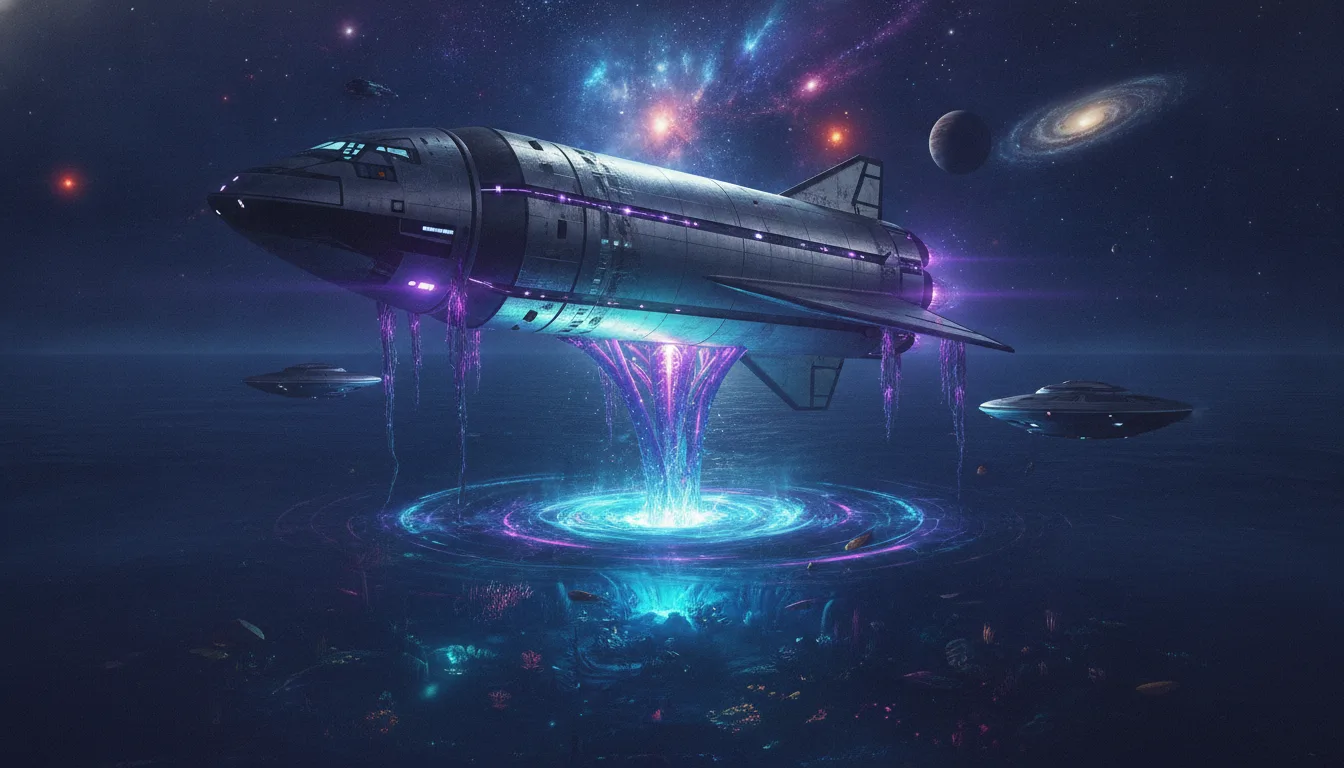
The image, shared by SpaceX via X (formerly Twitter), depicts the scorch-streaked 171-foot (52-meter) Starship upper stage resting largely out of the water, resembling a sleek orca or a modern submarine. This visual alone speaks volumes about the success of Flight Test 13. The 408-foot-tall (124-meter) Starship V3 embarked on a suborbital trajectory, culminating in what SpaceX has heralded as its softest splashdown to date. For a vehicle of this magnitude, designed for the rigors of deep space travel, to execute such a gentle landing and maintain buoyancy for an extended period is a significant engineering feat.
The Engineering Marvel of Starship V3
The Starship system, comprising the Super Heavy booster and the Starship upper stage, represents humanity's most ambitious endeavor towards fully reusable space transportation. The smooth splashdown of the upper stage is not merely a spectacle; it provides invaluable data for SpaceX’s engineers. It demonstrates improved control over descent and impact forces, crucial for developing future landing systems that aim for precise, intact recovery – whether on land or water. The ability to recover and inspect the vehicle after flight is paramount to accelerating the iterative design process that has become a hallmark of SpaceX’s rapid innovation.
The Vision of Full Reusability
The ultimate goal for Starship is full and rapid reusability for both its booster and upper stage. This paradigm shift in rocket design promises to drastically reduce the cost of space travel, making routine missions to the Moon, Mars, and beyond a tangible reality. Imagine refuelling, inspecting, and relaunching a rocket within days, much like an airplane. The success of Flight Test 13, particularly the integrity of the floating upper stage, brings this ambitious vision a step closer. It validates aspects of the vehicle’s structural resilience and aerothermal design, essential for the demanding cycles of interplanetary missions.
Overcoming Cosmic Hurdles
While this achievement is a clear triumph, SpaceX is acutely aware that significant challenges remain on the path to fully realizing Starship's potential. Foremost among these is the development of a heatshield that is not only durable enough to withstand the extreme temperatures of atmospheric re-entry but also rapidly reusable. Some experts have pointed to this as a potential bottleneck for missions requiring full and rapid reusability, as cited by Ars Technica. Ensuring the longevity and reliability of these critical components across multiple flights is a complex engineering puzzle that demands continuous innovation and rigorous testing. Further advancements are also needed in autonomous recovery systems and ground infrastructure to support rapid turnaround times.
A Glimpse into the Future of Spaceflight
Beyond the technical details, the sight of Starship floating in the Indian Ocean evokes a powerful sense of wonder and possibility. Video footage from aboard Starship and from the Starlink satellites deployed during Flight Test 13 showcased breathtaking views that truly felt like scenes from science fiction. This mission, and its remarkable aftermath, serves as a vivid reminder of the incredible progress being made in private space exploration. As SpaceX continues to refine its Starship system, each test flight, whether a launch, an orbital maneuver, or an unprecedentedly soft splashdown, brings us closer to a future where humanity is a multi-planetary species, exploring the vast space mysteries and perhaps one day even encountering extraterrestrial races among the stars. The journey to unlock the cosmos is long, but milestones like Flight Test 13 illuminate the path forward.


0 Comments
Login to leave a comment.