Navigating a Crowded Cosmos: Starlink's Constant Battle
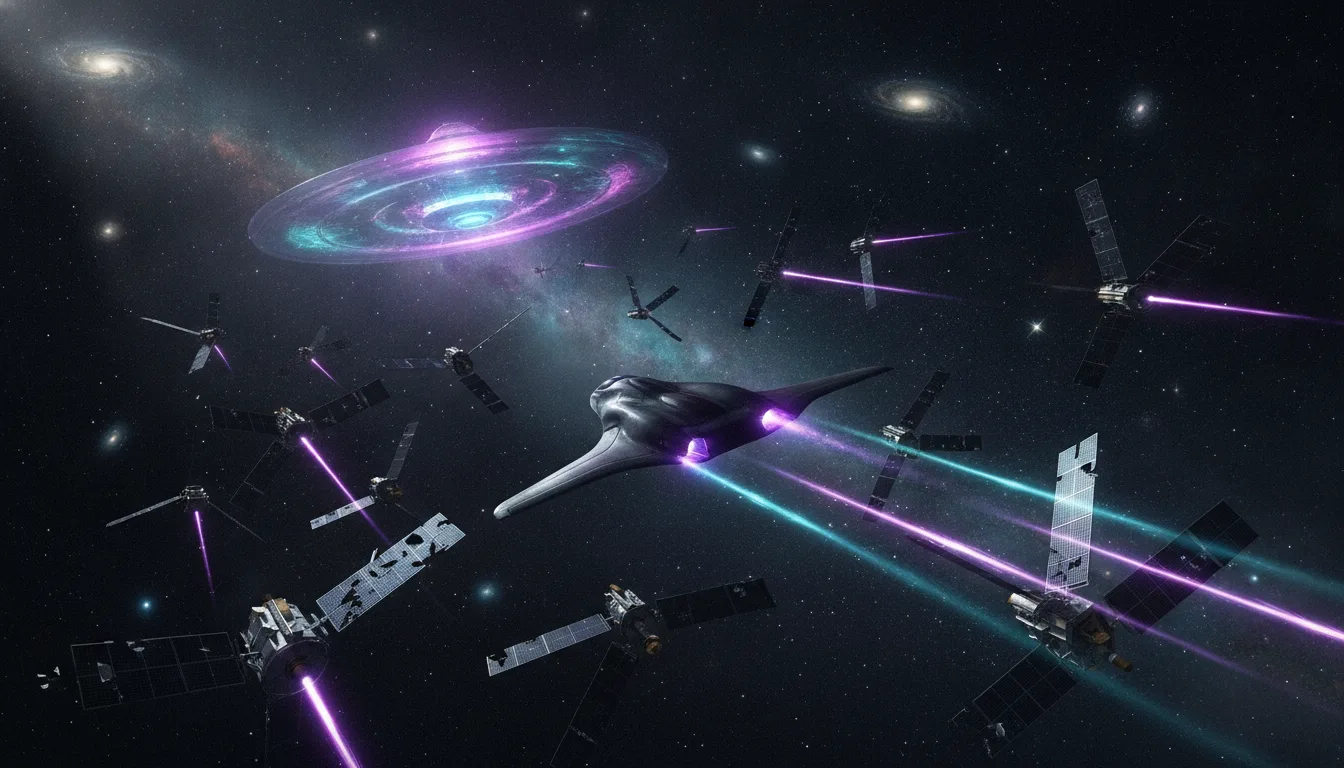
The pristine emptiness of space, once an infinite canvas for exploration, is rapidly becoming a congested thoroughfare. At the forefront of this burgeoning issue is SpaceX's Starlink constellation, a vast network of internet-beaming satellites that now performs an astonishing number of collision avoidance maneuvers. According to recent disclosures by SpaceX in its semiannual report to the Federal Communications Commission (FCC), Starlink satellites executed over 355,000 such dodges in the past year alone, between June 2025 and May 2026. This translates to each satellite in the ever-growing constellation having to swerve away from potential impacts on an almost weekly basis.
The data reveals a dramatic escalation in Low Earth Orbit traffic. Between December 2025 and May 2026, Starlink satellites carried out 207,152 avoidance actions, a significant jump from the 148,696 reported in the preceding six months. This surge brings the annual total to more than triple the number performed by the constellation in 2024, signaling a rapidly intensifying challenge in maintaining space sustainability. As the number of operational satellites, including those for global internet, continues to climb, the inherent risks of orbital collisions multiply.
Expert Warnings: The Inevitability of Impact
This escalating frequency of close calls has drawn grave warnings from leading experts in space safety. Hugh Lewis, a professor of astronautics at the University of Birmingham and a renowned space sustainability expert, voiced his concerns to Space.com. "I think we're heading towards a situation where there will be a collision involving an operational satellite in the constellation," Lewis stated, underscoring that this wouldn't be due to a lack of effort, but "in spite of all those maneuvers."
SpaceX's system for collision avoidance maneuvers is highly sophisticated, initiating a dodge when the probability of a collision exceeds 3 in 10 million. These maneuvers typically reduce the collision probability to about one in a million. However, Lewis highlights a critical flaw in this approach: "The problem is that if you make a million maneuvers and you have a residual probability of one in a million, you end up with an aggregate risk across your entire constellation that you can't get rid of." With SpaceX planning to expand its constellation to 100,000 satellites, the cumulative risk becomes substantial. Projections indicate that the Starlink constellation could perform a million avoidance maneuvers over its lifetime as early as June 2027, potentially reaching a million maneuvers annually by 2030. At that unprecedented scale, the "negligible" one-in-a-million risk becomes a stark, ever-present danger, posing a serious threat to the longevity and safety of satellite constellations and other orbital assets.
The Exponential Challenge of Low Earth Orbit
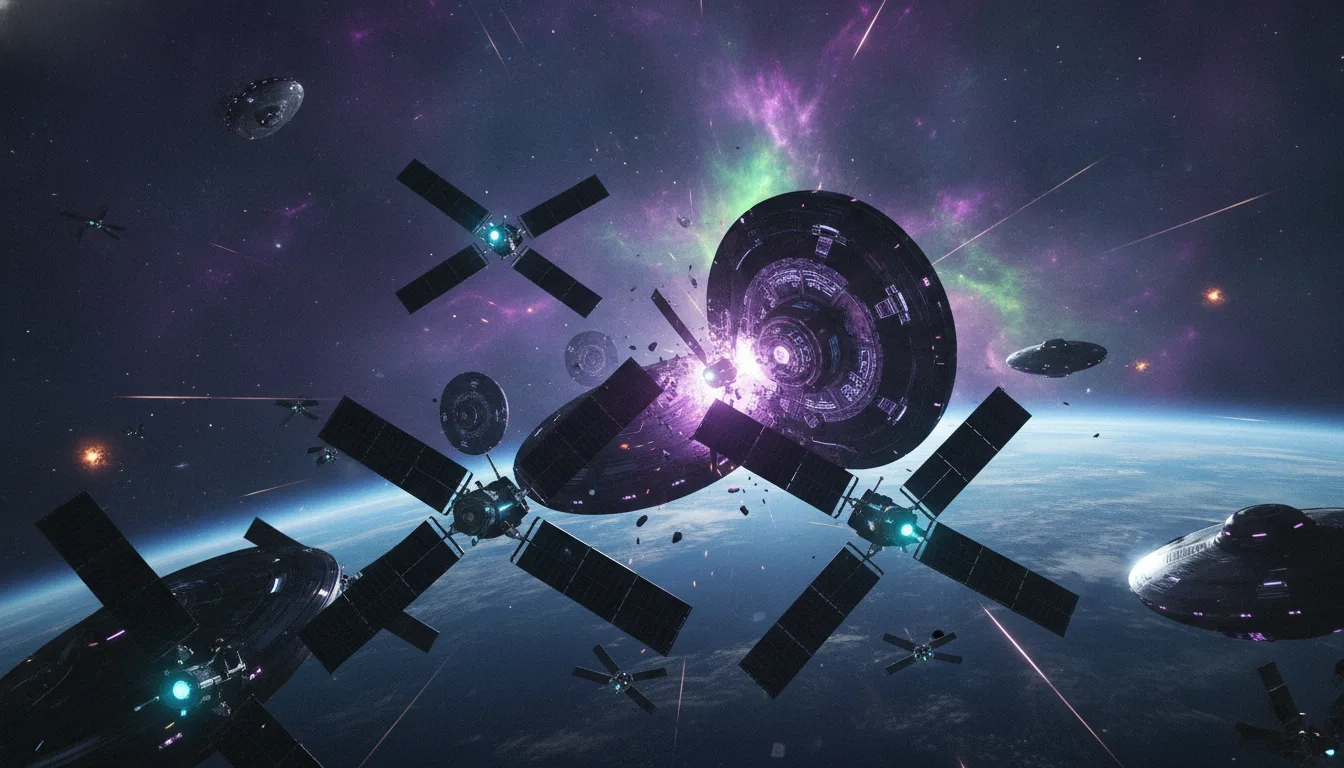
The dramatic increase in collision events is directly correlated with the rapid expansion of satellites in Low Earth Orbit (LEO). Starlink alone grew from approximately 6,000 satellites in 2024 to over 10,000 by June 2026. Simultaneously, the total number of active spacecraft in orbit surged from around 10,000 to approximately 16,000. This exponential growth transforms LEO from a sparsely populated region to a bustling, hazard-filled environment.
Tommaso Sgobba, Director of the International Association for the Advancement of Space Safety, emphasized the predictable nature of this predicament. "The more satellites you pack into [an orbital] shell, the more pairs of satellites exist that could potentially cross paths," Sgobba explained. He warned that "adding satellites does not just add risk one unit at a time, it multiplies the number of possible pairings. Double the satellites in a shell and you roughly quadruple the number of pairs that need to be watched." Furthermore, Sgobba pointed out that current collision probabilities are "highly inaccurate" due to the unpredictable effects of air drag, which fluctuate with space weather. This means satellites are often "dodging ghosts," burning precious fuel and shortening their operational lives in unnecessary maneuvers, a costly inefficiency in the fight against space debris.
The Broader Landscape of Space Traffic
While Starlink currently bears the brunt of orbital maneuvering responsibilities due to its sheer size, it's far from the only player. Other ambitious satellite constellations, such as Amazon LEO and China's Thousand Sails (Qianfan), are actively being deployed, further intensifying the density in LEO. The challenge is compounded by the fact that many new orbital data center projects target specific, convenient orbital regions, leading to inevitable overlap.
Hugh Lewis stresses the importance of orbital separation as the safest approach. However, this raises complex questions about "orbital carrying capacity" and the "first mover benefit," where early deployment grants de facto claims over valuable orbital real estate. This competitive aspect makes coordinated space traffic management incredibly difficult without robust international frameworks.
Urgent Calls for Proactive Space Governance
Recognizing the impending crisis, experts like Tommaso Sgobba are advocating for significant regulatory reforms. Sgobba calls for mandatory disclosure of predicted numbers of collision avoidance maneuvers and the fuel capacity to perform them, to be submitted to regulators before any launch applications are granted. "Right now, there is no clear requirement for a company to say, before launch, how many collision avoidance maneuvers a constellation of this size and density will need every year and whether the satellites carry enough fuel and automation to actually perform them all," he wrote.
Sgobba posits that the crowding of orbit is not an unforeseen accident but a "manageable, predictable engineering workload." He argues that regulators must proactively treat it as such, demanding comprehensive data upfront rather than reacting to headlines about near misses or, worse, actual collisions. Without such proactive measures, the intricate network of satellites that supports our modern world and unlocks the space mysteries of the cosmos through scientific observation faces an increasingly perilous future, overshadowed by the very technology designed to advance us.




0 Comments
Login to leave a comment.